
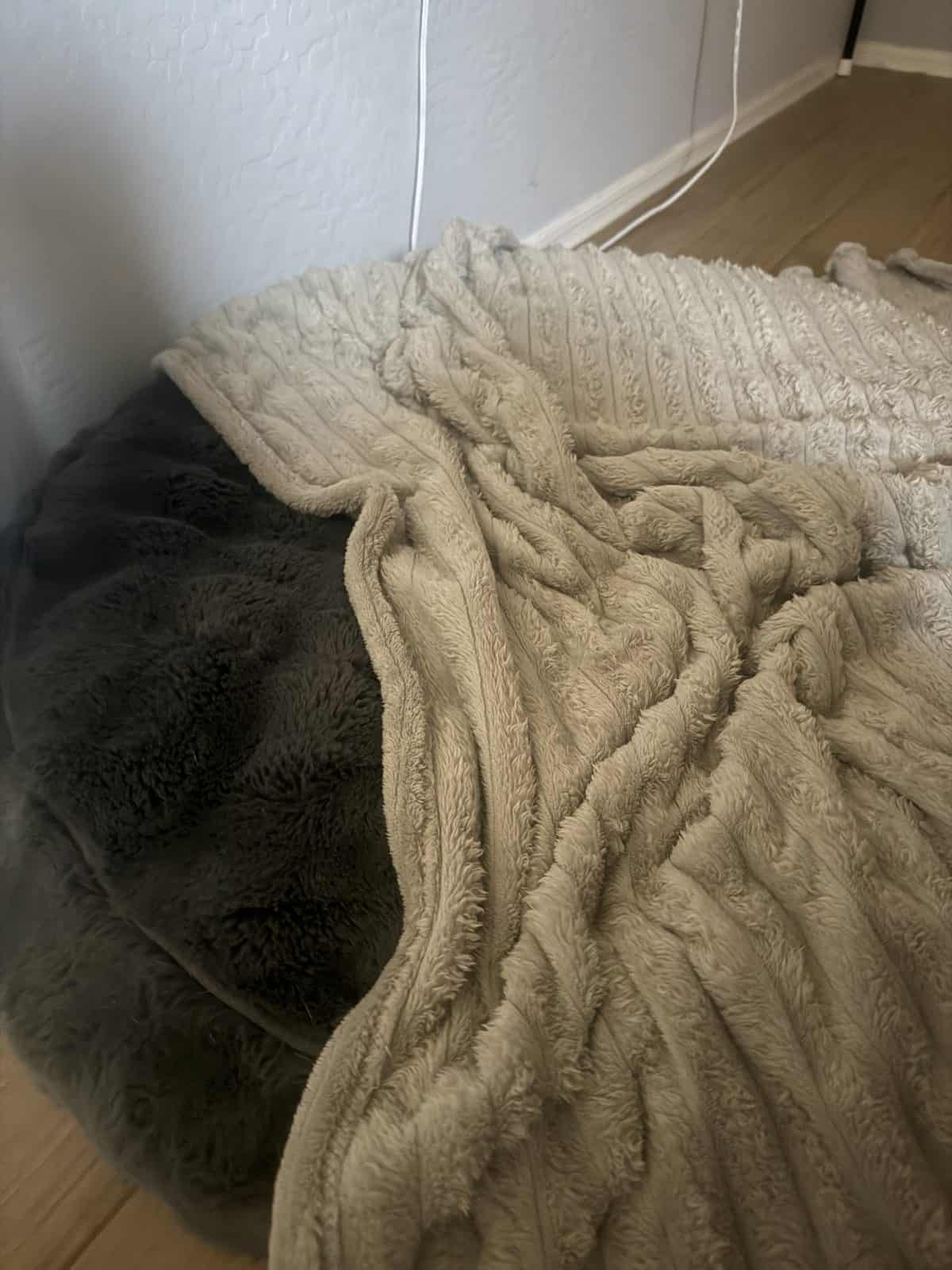
A bolster dog bed has raised sides for dogs who like to lean or curl against an edge, while a flat dog bed offers an open surface for dogs who sprawl or move around, so the best choice depends on how your dog sleeps. In the bolster vs flat dog bed decision, it comes down to whether your dog wants a headrest and walls or open space. Below is the full comparison, including my own setup, and for shape-independent sizing see what size dog bed you need.
Quick Verdict
Choose a bolster bed if your dog curls up, likes to rest their head on something, or feels safer against raised sides. Choose a flat bed if your dog sprawls, flips positions, or you want an easy-to-move, easy-to-clean surface. Many burrowers do fine on a flat bed with a blanket to nest in.
Why Trust This Guide
I use a flat plush cushion bed for my small dog (her bed since the day I got her), with a blanket she circles and burrows into before settling, so I know the flat-plus-blanket setup firsthand and how well it works for a nesting dog. The bolster side is the trade-off I weighed, so this comparison reflects real use rather than a preference on paper.
Key Takeaways
- Bolster beds have raised sides for leaning and curling.
- Flat beds offer open space for sprawlers and movers.
- Bolster suits dogs who like a headrest and enclosed feel.
- Flat beds are easier to move and often easier to clean.
- A flat bed plus a blanket satisfies many burrowers.
How We Compared
We compared these on what actually shapes your dog’s comfort: sleeping style, sense of security, space to stretch, ease of cleaning, and how well each moves around the home. The question is not which bed is objectively better, but which matches how your dog rests. A bolster bed trades some open surface for walls and a headrest, while a flat bed trades the enclosed feeling for space and simplicity. Each section below names which style wins for that factor so you can match the bed to your dog.
Bolster vs Flat at a Glance
| Factor | Bolster bed | Flat bed |
|---|---|---|
| Best for | Curlers and leaners | Sprawlers and movers |
| Security feel | High, raised sides | Lower, open surface |
| Headrest | Yes, built-in rim | No, unless propped |
| Usable space | Reduced by the rim | Full surface usable |
| Ease of moving | Bulkier | Lighter, packable |
| Cleaning | Bulkier to wash | Often simpler |
Bolster Dog Beds, Pros and Cons
- Pros: raised sides give a sense of security, a built-in headrest for dogs who like to rest their chin, a cozy enclosed feel for curlers, and warmth from the surrounding bolster.
- Cons: the rim reduces usable sleeping space, they are bulkier to move and wash, and sprawling dogs can find the walls restrictive.
A bolster bed suits dogs who curl up, lean against things, or feel safer with walls around them. It is less ideal for big sprawlers or anyone who wants a bed that is easy to carry room to room.
Flat Dog Beds, Pros and Cons
- Pros: the whole surface is usable, great for dogs who sprawl and change position, lighter and easier to move, and often simpler to clean and store.
- Cons: no built-in headrest or walls, less of an enclosed, secure feel, and burrowers may want a blanket added for nesting.
A flat or cushion bed suits dogs who stretch out, flip positions, or move around, and owners who want a simple, portable bed. It is less ideal for dogs who specifically crave the walled-in security of a bolster.
Which Is Better for Curlers and Leaners?
The bolster bed wins for dogs who curl and lean. If your dog naturally tucks into a ball, rests their head on the edge of the couch, a comfort need that also drives an orthopedic vs standard bed choice for older dogs, or presses against furniture to sleep, a bolster gives them exactly that, with raised sides to lean on and a rim to use as a pillow. The enclosed shape also appeals to dogs who feel safer with something at their back. For these dogs, the walls are not a limitation but the whole point, providing comfort and security a flat surface cannot match. A quality bolster bed is the natural pick here.
Which Is Better for Sprawlers and Movers?
The flat bed wins for dogs who sprawl and reposition. Dogs who stretch out full length, flip onto their backs, or shift around through the night need open, unobstructed space, and a flat cushion gives them the entire surface to use. Raised sides would only get in their way, much as they can crowd a larger dog. My dog circles and stretches out on her flat plush cushion, and the open surface lets her settle however she likes. If your dog is a mover rather than a curler, a flat bed almost always suits them better, and sizing up adds even more room.
Which Is Better for Burrowers?
This one is closer, and the answer might surprise you. Dogs who love to burrow and nest are often assumed to need a cave or heavily bolstered bed, and those do work well. But a flat bed with a soft blanket added can satisfy the same instinct beautifully. My dog burrows into the blanket I keep on her flat cushion before settling, getting the nesting comfort she wants without giving up the open surface. So for burrowers, either a bolster or cave bed, or a flat bed plus a blanket, can work, which gives you flexibility. If your dog burrows heavily, you might also look at cave-style beds.
Which Is Easier to Clean and Move?
The flat bed wins on practicality. A flat cushion is lighter, easier to carry from room to room, and simpler to fit into a washing machine or lift for cleaning. Bolster beds, with their built-up sides and extra fill, are bulkier to move and can be harder to wash and dry thoroughly. If you move your dog’s bed around the house, as I do, carrying it between the living room and bedroom each day, a flat bed makes that routine effortless. For owners who value easy upkeep and portability, the flat design is the more convenient choice.
Which Fits Your Dog
| If your dog | Better choice |
|---|---|
| Curls up or leans to sleep | Bolster bed |
| Sprawls or changes position | Flat bed |
| Likes a headrest | Bolster bed |
| Burrows and nests | Either, or flat plus a blanket |
| Needs an easy-to-move bed | Flat bed |
How to Choose Between Them
Watch how your dog sleeps for a few nights and let that decide. If they curl tight, lean on things, or seek out enclosed spots, a bolster gives them the security and headrest they want. If they stretch out, sprawl, or move around, a flat bed gives them the open space they need, with the bonus of being easy to move and clean. For burrowers, either can work, so you can choose based on the other factors. When you are unsure, a flat plush bed with a blanket is a flexible, low-risk starting point, which is exactly the setup my dog thrives on.
The Verdict
Neither shape is better overall, they suit different sleepers. The bolster bed wins for curlers, leaners, and dogs who want a secure, enclosed feel with a built-in headrest. The flat bed wins for sprawlers, movers, and owners who want an easy-to-move, easy-to-clean surface, and it handles burrowers well with a blanket added. Match the bed to how your dog actually sleeps, and explore the options in the guides below.
Recommended Reading
- the best bolster dog beds, for curlers and leaners.
- the best plush dog beds, for cozy flat comfort.
- the best beds for small dogs, if you have a smaller dog.
- how to choose the right dog bed, for the full buyer’s guide.
Bolster vs Flat Dog Bed FAQ
Is a bolster or flat dog bed better?
Neither is universally better; it depends on your dog. Bolster beds suit curlers and leaners who want raised sides and a headrest, while flat beds suit sprawlers and movers who want open space. Match the bed to how your dog sleeps.
Do dogs prefer bolster beds?
Many dogs who curl up or like to feel secure prefer bolster beds for the raised sides and headrest. But dogs who sprawl or move around often prefer the open surface of a flat bed. Watch your dog’s sleeping style to know which they will like.
Are bolster beds good for burrowers?
They can be, since the raised sides give a nesting feel. But a flat bed with a soft blanket also satisfies burrowers well. My dog burrows into a blanket on her flat cushion, so both approaches work, giving you flexibility in what to choose.
Is a flat dog bed easier to clean?
Usually yes. Flat cushion beds are lighter, easier to fit in a washing machine, and simpler to move for cleaning. Bolster beds, with their extra sides and fill, tend to be bulkier to wash and dry thoroughly.
Which bed is better for a small dog?
Either can work for a small dog; it depends on their sleeping style. I use a flat plush cushion for my small dog with a blanket, sized up for space, and she loves it. Curlers may prefer a small bolster bed for the cozy, enclosed feel.
Can I use a blanket instead of a bolster bed?
Often yes. Adding a soft blanket to a flat bed gives burrowing and nesting dogs something to tuck into, satisfying much of what a bolster provides. It is a flexible, low-cost way to add coziness without committing to a bolstered shape.
