
For the foundational guidance behind these picks, see our complete guide to bowls, feeders, and water.
Disclosure: HappyPaws is reader-supported. As an Amazon Associate, we earn from qualifying purchases made through links on this page, at no extra cost to you.
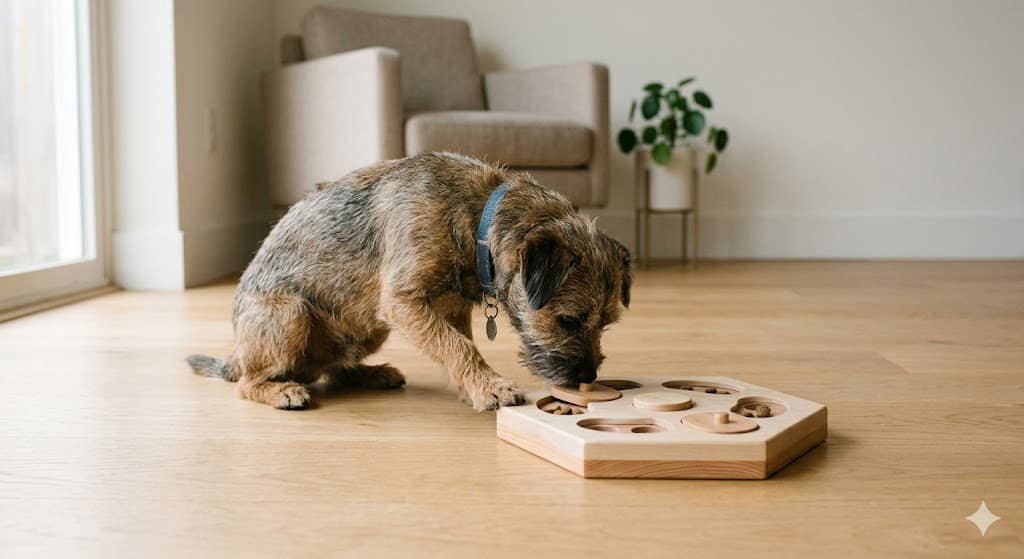
The puzzle feeder problem with smart dogs is specific and frustrating. You buy a puzzle feeder marketed for mental stimulation, your Border Collie solves it in 90 seconds, and the toy gets relegated to the toy box while your dog goes back to looking for trouble. Standard puzzle feeders designed for average difficulty fail the dogs that need mental stimulation most, the high-IQ working breeds, the bored apartment dogs, the dogs whose destructive behavior signals understimulation. The solution isn’t more puzzle feeders; it’s puzzle feeders specifically designed for the difficulty level that actually challenges smart dogs.
This guide covers the five best puzzle feeders for smart dogs in 2026, evaluated on actual difficulty for smart breeds, durability under intense problem-solving, ease of cleaning, and the practical question of whether the puzzle keeps your dog occupied beyond the first few sessions rather than being solved permanently and forgotten.
Why Smart Dogs Need Different Puzzle Feeders
The cognitive needs of high-IQ breeds differ significantly from those of average dogs in ways that affect puzzle selection.
Smart breeds, Border Collies, Australian Shepherds, Poodles, Belgian Malinois, German Shepherds, and similar working breeds, were bred for sustained, complex problem-solving. Their cognitive systems require regular challenge to function properly, just as their physical systems require regular exercise. Without adequate mental stimulation, these dogs develop behavioral problems that physical exercise alone cannot address.
Standard puzzle feeders designed for average difficulty fail these dogs through two mechanisms. First, they’re too easy, the smart dog solves the puzzle quickly and gains no sustained mental engagement. Second, even when initially challenging, smart dogs remember solutions and repeat them efficiently, defeating the long-term value of the toy.
The right puzzle feeders for smart dogs use one of two approaches. Some include genuine difficulty progression, multiple stages, increasingly complex sequences, or layered challenges that require sustained problem-solving rather than single-action solutions. Others use randomization or modularity that prevents memorization from defeating the puzzle, requiring new problem-solving each session.
The mental stimulation effect matters beyond preventing boredom. Studies on canine cognitive enrichment show measurable improvements in calm behavior, reduced reactivity, better sleep, and decreased separation anxiety in dogs receiving regular cognitive challenges. For smart dogs specifically, the cumulative effect can transform behavior in ways that purely physical exercise doesn’t accomplish.
For broader enrichment, our guides on the best dog enrichment toys for high energy dogs and the best snuffle mats for dogs cover complementary mental stimulation approaches that pair well with puzzle feeders.
What to Look For in Puzzle Feeders for Smart Dogs
Actual Difficulty Level for Smart Breeds
Puzzle feeder difficulty ratings often fail smart dogs because they’re calibrated for average dogs. Look for products specifically marketed as “advanced,” “expert,” or “level 3-4” difficulty rather than entry-level alternatives. Reviews from owners of smart breeds (Border Collies, Poodles, etc.) provide better difficulty assessment than manufacturer claims.
The right difficulty level produces 10-20 minutes of engagement per session rather than 90-second solutions. Some smart dogs benefit from puzzles that take 30+ minutes initially, becoming faster as they learn patterns but remaining engaging across many sessions.
Anti-Memorization Design
Smart dogs memorize solutions quickly, defeating fixed-puzzle designs across just a few sessions. Anti-memorization features extend the useful life dramatically. Look for puzzles with randomizable components (rotating chambers, shuffleable compartments), modular pieces that can be reconfigured between sessions, or layered challenges where the same puzzle produces different sequences each time.
Multi-stage puzzles work even without randomization because each stage requires different problem-solving. The dog can’t just memorize a single solution sequence, they must work through different challenges within the same session.
Durability Against Aggressive Problem Solving
Smart dogs apply teeth, claws, and force to puzzles they can’t solve through intended means. Quality puzzle feeders use materials that resist destruction, food-safe ABS plastic, reinforced construction at stress points, and finishes that survive aggressive chewing. Budget puzzles often fail within weeks when smart dogs apply problem-solving force beyond intended use parameters.
Verify reviews from owners of aggressive chewers specifically. The same puzzle that lasts years for gentle dogs may last days for a determined Belgian Malinois trying to extract every kibble piece.
Cleaning Practicality
Puzzle feeders accumulate food residue, saliva, and crumbs in their crevices. Designs that require complete disassembly for cleaning get used less often because owners don’t want to disassemble after every session. Dishwasher-safe puzzles or simple-design puzzles with accessible crevices get used more consistently.
The cleaning practicality directly affects how often you use the puzzle. A puzzle you only use weekly, because cleaning is annoying, provides less value than a slightly simpler puzzle you use daily.
Compatibility With Your Food Type
Some puzzle feeders work only with dry kibble of specific sizes. Others accept varied food types, including wet food, treats, frozen mixtures, or homemade combinations. Match the puzzle compatibility to your dog’s actual feeding pattern.
For variety-focused enrichment, puzzles accepting multiple food types extend engagement options significantly. Frozen wet food puzzles produce 30-45 minutes of engagement versus 10-15 minutes for dry kibble in the same puzzle.
Best Puzzle Feeders for Smart Dogs in 2026: Our Top 5 Picks
1. Outward Hound Nina Ottosson Dog Casino, Best Overall
Best Overall Puzzle Feeder for Smart Dogs | Price: ~$30
Check Price on AmazonBest for: Most smart dog breeds, owners wanting genuine difficulty for working breeds, buyers seeking a puzzle that stays challenging across many sessions.
The Nina Ottosson Dog Casino represents the practical gold standard for advanced puzzle feeders. Nina Ottosson built her reputation specifically on puzzle designs that challenge smart dogs, and the Casino is among the most challenging products in her line. The puzzle requires the dog to complete a three-step sequence, sliding bones to reveal lids, lifting lids to access drawers, and pulling drawers to find treats. Each step requires different problem-solving, preventing single-solution memorization.
The difficulty genuinely matches working breed cognition. Most Border Collies, Poodles, and similar smart breeds require 15-30 minutes to solve the Casino during the first sessions. Even after learning the mechanics, the multi-step sequence maintains engagement through sustained problem-solving rather than quick solutions.
Build quality holds up to aggressive problem-solving. The reinforced plastic construction tolerates the teeth and force that smart dogs apply when stuck. Most owners report multi-year durability under regular use, with the puzzle remaining engaging across that timeline.
Cleaning is straightforward without complete disassembly. The drawers slide out for cleaning access, and the main body wipes down easily. Dishwasher use isn’t recommended, but it isn’t necessary given the simple cleaning access.
PROS:
- Three-step puzzle prevents single-solution memorization
- Difficulty calibrated for working breed cognition
- Multi-year durability under aggressive problem-solving
- Easy cleaning without full disassembly
- Nina Ottosson’s reputation for puzzle quality
CONS:
- Higher price than basic puzzle feeders
- A single design doesn’t randomize between sessions
- Smart dogs eventually master the sequence
- A larger size requires storage space
For complete enrichment programs, our guide on the best dog enrichment toys for high energy dogs covers the broader toy categories that pair with puzzle feeders.
2. PetSafe Busy Buddy Tug-A-Jug, Best for Active Engagement
Best Active Engagement Puzzle | Price: ~$25
Check Price on AmazonBest for: High-energy smart dogs needing active engagement, owners wanting puzzles that combine physical and mental stimulation, and breeds with strong prey drive.
The Tug-A-Jug takes a different approach to puzzle feeding. Rather than static problem-solving, the dog must move and manipulate the jug to release treats and kibble through the central opening. The design combines physical activity with mental challenge, which suits high-energy smart dogs whose stimulation needs include movement alongside cognition.
The rope handle adds tug interaction that engages prey drive while delivering treats. For Belgian Malinois, Australian Shepherds, and similar high-drive breeds, the combined physical-mental approach often produces more sustained engagement than pure mental puzzles.
Durability is exceptional for the price point. The thick plastic construction handles aggressive manipulation, throwing, and chewing without significant degradation. Reviews from owners of destructive chewers consistently report multi-year use without breakage.
The trade-off is a mess. The Tug-A-Jug delivers treats by being tilted, shaken, or manipulated, which can produce scattered treats across floors. Best used in tile or hardwood areas where cleanup is straightforward, rather than carpet areas where scattered kibble produces ongoing problems.
PROS:
- Combines physical movement with mental challenge
- Exceptional durability under aggressive use
- Engages prey drive for working breeds
- Adjustable difficulty through an internal stopper
- Strong value at moderate pricing
CONS:
- Treat scatter requires hard-floor use
- Less mental challenge than multi-step puzzles
- The rope handle requires periodic cleaning
- Single-mechanism puzzle without progression
3. Trixie Mad Scientist Turn Around, Best for Long-Term Engagement
Best Long-Term Engagement Puzzle | Price: ~$35
Check Price on AmazonBest for: Dogs that solve other puzzles quickly, owners wanting puzzles that stay engaging across years, smart dogs who’ve outgrown standard puzzle feeders.
The Trixie Mad Scientist uses an unusual design that maintains engagement longer than most fixed puzzles. Three flasks rotate on a central base, with treats hidden inside that fall out when the flasks are tipped at the correct angles. The combination of rotation and tipping requires sustained physical-mental coordination that simple puzzles don’t demand.
The randomization advantage is significant. Each session has different flask positions, different treat distributions, and different optimal sequences. The same puzzle produces meaningfully different challenges across sessions, preventing the memorization-defeat that affects fixed-solution puzzles.
For owners of dogs who’ve outgrown basic puzzles, the Mad Scientist often provides the next difficulty tier without requiring premium-priced specialty equipment. Dogs who solved Outward Hound or PetSafe puzzles in minutes typically engage with the Mad Scientist for sustained sessions.
Build quality is solid but not premium. The construction handles normal use well, though aggressive chewing can damage the rotating mechanism over time. For dogs that destroy puzzles, the Mad Scientist isn’t the right choice; for problem-solvers who manipulate rather than destroy, it works excellently.
PROS:
- Randomization prevents memorization-defeat
- Three flasks provide multiple simultaneous puzzles
- Sustained engagement across years of use
- Greater difficulty for dogs that outgrow basics
- Unique design, hard to find elsewhere
CONS:
- Aggressive chewers can damage the mechanism
- Higher learning curve for first-time puzzle users
- More complex cleaning than simple alternatives
- A larger footprint requires storage planning
4. Kong Wobbler, Best Budget Pick
Best Budget Puzzle Feeder | Price: ~$20
Check Price on AmazonBest for: Budget-conscious smart dog owners, beginners testing whether puzzle feeders fit their dog, and multi-dog households needing affordable enrichment for each dog.
The Kong Wobbler delivers genuine puzzle feeder functionality at the lowest reasonable price for the category. The weighted bottom causes the toy to wobble and rock when manipulated, releasing kibble through a top opening when the dog pushes, paws, or nuzzles correctly. The design provides a genuine mental challenge without complex multi-step requirements.
Kong’s build quality matches the brand’s broader reputation. The construction handles aggressive use without significant degradation. Multi-year durability is the norm rather than the exception, even with smart dogs applying problem-solving force.
For most smart dogs, the Wobbler provides 10-20 minute sessions of engagement. The challenge level sits between basic puzzles and advanced alternatives like the Nina Ottosson Casino, making it suitable for smart dogs without the mastery that the more sophisticated puzzles require.
The dishwasher-safe design simplifies cleaning. Top-rack dishwasher use handles the puzzle effectively, addressing the cleaning practicality concern that affects more complex puzzle designs.
PROS:
- Lowest price for a genuine puzzle feeder function
- Kong’s durability standards across years of use
- Dishwasher safe for easy cleaning
- Adjustable difficulty through opening size
- Wide retail availability
CONS:
- Less challenging than premium alternatives
- Single mechanism without multi-step progression
- Smart dogs may solve puzzles quickly compared to advanced puzzles
- Limited use case beyond basic enrichment
5. KONG Genius Mike, Best for Beginners to Puzzles
Best Beginner Puzzle for Smart Dogs | Price: ~$15
Check Price on AmazonBest for: Smart dogs new to puzzle feeders, owners wanting a starter puzzle before advanced alternatives, and beginners building puzzle skills gradually.
The KONG Genius Mike works as the introduction puzzle for smart dogs new to the puzzle feeder concept. The simple ball design with internal compartments and openings releases treats as the dog manipulates the toy. The simpler mechanism builds puzzle-solving skills without overwhelming dogs unused to puzzle feeders.
The connectability feature matters for skill progression. Multiple Genius Mike toys connect to create more complex puzzle configurations as the dog masters single-unit use. This allows gradual difficulty progression without buying entirely new puzzles for each skill level.
For owners introducing puzzle feeders to dogs who’ve never used them, the Genius Mike provides genuine functionality without the difficulty that frustrates first-time puzzle users. Once dogs master basic puzzle mechanics, they can progress to Outward Hound or Trixie alternatives that provide sustained challenge.
The trade-off is limited stand-alone engagement for established puzzle users. Smart dogs with puzzle experience solve the Genius Mike quickly, making it unsuitable as a primary puzzle for skilled puzzle-solving dogs.
PROS:
- Lowest barrier to entry for puzzle feeders
- Connectability allows for difficulty progression
- KONG durability standards
- Affordable for testing puzzle feeders
- Simple mechanism for first-time users
CONS:
- Limited engagement for puzzle-experienced dogs
- Single-toy difficulty insufficient for advanced users
- Smart dogs may solve quickly
- Not suitable as a primary puzzle for skilled solvers
How to Match a Puzzle to Your Dog’s Skill Level
The right puzzle depends on your dog’s current puzzle-solving experience and breed cognition.
For most smart dogs with some puzzle experience, the Outward Hound Nina Ottosson Dog Casino delivers the practical sweet spot. The three-step design provides a genuine challenge for working breed cognition while maintaining engagement across years of regular use.
High-energy breeds that benefit from combined physical-mental stimulation work well with PetSafe Busy Buddy Tug-A-Jug. The movement-and-cognition combination matches the activity needs of Belgian Malinois, Australian Shepherds, and similar high-drive breeds.
Dogs that have mastered basic puzzles and need a next-tier challenge benefit from Trixie Mad Scientist Turn Around. The randomization and multi-flask design prevent the memorization-defeat that affects fixed-solution puzzles.
Budget-conscious smart dog owners or those introducing puzzles can start with the Kong Wobbler. The genuine puzzle functionality at a lower cost matches occasional-use economics or testing scenarios.
Smart dogs new to puzzle feeders entirely benefit from KONG Genius Mike. The lower difficulty builds puzzle-solving skills before progressing to advanced alternatives.
Quick Comparison Table
| Puzzle Feeder | Best For | Price | Difficulty | Anti-Memorization |
|---|---|---|---|---|
| Outward Hound Nina Ottosson Casino | Most smart dogs | ~$30 | Advanced | Multi-step sequence |
| PetSafe Busy Buddy Tug-A-Jug | Active engagement | ~$25 | Moderate | Adjustable difficulty |
| Trixie Mad Scientist Turn Around | Long-term engagement | ~$35 | Advanced | Randomized flasks |
| Kong Wobbler | Budget pick | ~$20 | Moderate | Adjustable opening |
| KONG Genius Mike | Beginners | ~$15 | Basic | Connectability progression |
Our Verdict
Most smart dog owners do best with Outward Hound Nina Ottosson Dog Casino. The combination of three-step sequence difficulty, working breed-calibrated cognition, and multi-year durability delivers sustained engagement that justifies the moderate price. Buy this unless you have specific reasons to choose differently.
High-energy smart dogs benefit from PetSafe Busy Buddy Tug-A-Jug. The combined physical-mental engagement matches the activity needs of high-drive working breeds whose stimulation requirements include movement alongside cognition.
Dogs that have mastered standard puzzles benefit from Trixie Mad Scientist Turn Around. The randomization and multi-flask design provide a sustained challenge that fixed-solution alternatives can’t match.
Budget-conscious owners or those introducing smart dogs to puzzle feeders should consider the Kong Wobbler. The genuine puzzle functionality at a lower cost provides solid mid-tier value.
Smart dogs new to puzzles entirely benefit from KONG Genius Mike. The beginner-friendly difficulty builds puzzle-solving skills before progressing to advanced alternatives.
Pair the right puzzle feeder with snuffle mats for nose-based enrichment, lick mats for calming engagement, and treat-dispensing toys for variety, and you have a comprehensive mental enrichment program that addresses the cognitive needs of smart breeds across multiple modalities.
Frequently Asked Questions
How long do smart dogs need with puzzle feeders daily?
Most smart dogs benefit from 20-40 minutes of puzzle feeder engagement daily, distributed across 2-3 sessions rather than single long sessions. The frequency matters more than session length, daily engagement produces better behavioral outcomes than less frequent, longer sessions. For high-energy working breeds, puzzle time can extend to 60+ minutes daily without diminishing returns.
What makes a puzzle feeder challenging enough for smart dogs?
Three factors matter most. Multi-step sequences require sustained problem-solving rather than single-action solutions. Randomization prevents memorization-defeat across repeated sessions. Difficulty calibration specifically for working breed cognition rather than average dog assumptions. Puzzles marketed as “advanced” or “level 3-4” typically meet these criteria; entry-level puzzles often fail.
Can puzzle feeders replace exercise for high-energy dogs?
No. Mental stimulation complements rather than replaces physical exercise. Working breeds need both, typically 60-90 minutes of physical exercise daily plus 20-40 minutes of mental enrichment. Puzzle feeders specifically address the mental side that physical exercise alone cannot provide. Together, they produce the comprehensive stimulation that prevents behavioral problems.
Are puzzle feeders safe for aggressive chewers?
Quality puzzle feeders from established brands tolerate normal problem-solving force. Aggressive chewers who destroy toys may damage even quality puzzles over time. Check reviews specifically from owners of destructive chewers before buying. Always supervise puzzle feeder use to identify any damage early and prevent ingestion of broken pieces.
How do I get my dog to use a puzzle feeder?
Start by showing your dog treats placed visibly in the puzzle. Let them retrieve easy treats first to build a positive association. Gradually increase the difficulty as your dog learns the mechanism. Most smart dogs adapt to puzzle feeders within 1-3 sessions. For reluctant dogs, mix high-value treats with regular kibble to maintain motivation through initial frustration.
Should I feed full meals through puzzle feeders?
Distributing daily kibble through puzzles extends meal time from 90 seconds to 15-30 minutes, providing meaningful mental stimulation alongside feeding. The approach works particularly well for fast eaters whose normal meals produce digestive issues from gulping. For high-energy breeds, puzzle-fed meals reduce daytime boredom and produce calmer behavior between feeding times.
How often should I clean puzzle feeders?
Daily cleaning prevents food residue buildup that affects hygiene and odor. Dishwasher-safe puzzles handle daily cleaning easily. Hand-wash-only puzzles benefit from at least weekly thorough cleaning with quick rinses between sessions. Wet food puzzles require cleaning after every use; dry kibble puzzles tolerate longer intervals.
How long do puzzle feeders last with smart dogs?
Quality puzzle feeders last 2-5 years with regular use. Premium brands (KONG, Nina Ottosson, PetSafe) typically last toward the longer end. Budget alternatives typically last 1-2 years. Aggressive chewers reduce lifespan significantly. The cumulative cost across years averages $10-15 per year for genuine mental enrichment that produces measurable behavioral benefits.
Recommended Reading
See also our guides to why do dogs twitch in their sleep.
Related Reading
Explore more: smart pet doors, why do dogs sleep so much, elevated dog feeders large breeds, Constant Chewing? Why Dogs Lick Their Paws and When to Worry, smart dog collars for training, flea and tick prevention for dogs, why dogs tilt heads, and why dogs circle before lying down.
