
For the foundational guidance behind these picks, see our complete guide to bowls, feeders, and water.
For our current top picks, see the best elevated dog feeders large breeds guide. Use a standard floor-level bowl for most dogs, since it is simple, stable, and entirely sufficient, and consider an elevated bowl mainly for a tall dog or a senior with neck or joint stiffness. The elevated vs standard dog bowl choice comes down to height and posture, and for some health questions the right answer is a conversation with your veterinarian. Our elevated feeder guide covers raised options for bigger dogs.
Quick Verdict
Pick a standard floor-level bowl for simple, stable, everyday feeding that suits most dogs and is easy to clean. Consider an elevated bowl for a taller dog or a senior with neck or joint stiffness who may reach raised food more comfortably. Some health claims about raised feeding are debated, so check with your veterinarian for your individual dog.
Why Trust This Guide
This comparison includes firsthand use of a standard dog bowl and draws on the pet-care guidance cited in Sources. It is general information, not veterinary advice.
Key Takeaways
- Standard floor-level bowls are simple, stable, and work well for most dogs.
- Elevated bowls raise food off the floor, suiting taller dogs and some seniors.
- Raised feeding height is mainly about comfort and posture for the right dog.
- Some health claims about elevated feeding are debated, so ask your veterinarian.
- Whichever you use, keep the bowl clean and stable.
Disclosure: HappyPaws is reader-supported. As an Amazon Associate, we earn from qualifying purchases made through links on this page, at no extra cost to you.
How We Compared These
We compared the two on everyday suitability, comfort, simplicity, cost, and health considerations, combining firsthand use of a standard dog bowl with general pet-care guidance on feeding setups.1 Because some claims about raised feeding and health are debated rather than settled, those points stay general, and the American Veterinary Medical Association is the right source to consult for an individual dog.
Elevated vs Standard at a Glance
This table summarizes the key differences at a glance.
| Factor | Standard bowl | Elevated bowl |
|---|---|---|
| Height | Floor level | Raised |
| Best for | Most dogs | Tall dogs, some seniors |
| Simplicity | Very simple | Stand to assemble |
| Cost | Low | Higher |
| Footprint | Minimal | Fixed frame |
| Health claims | Neutral | Debated, ask a vet |
Standard Dog Bowl: Pros and Cons
A standard bowl sits on the floor, where the dog lowers its head to eat.
Pros
- Stable, simple, and inexpensive
- Easy to clean and easy to replace
- Suits the vast majority of dogs
- Nothing to assemble or tip over
Cons
- Less comfortable for very tall dogs
- Can mean more bending for a stiff senior
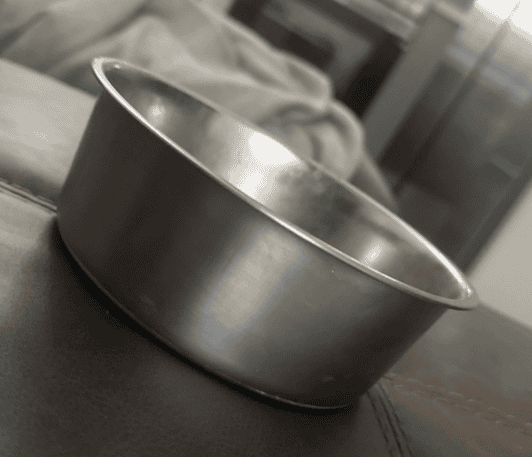
I use a plain standard floor-level bowl for my dog’s food, and it has worked well for us. She free-feeds, so her eating pace has never been an issue, and a simple standard bowl has been all she needs.
For meals on the move, see our collapsible travel bowls, and for water our dog water fountain guide is a good companion.
Check Price on AmazonElevated Dog Bowl: Pros and Cons
An elevated bowl is raised on a stand so food sits closer to the dog’s chest height.
Pros
- More comfortable for taller dogs
- Less bending for some stiff seniors
- Holds bowls securely in a frame
Cons
- Costs more and takes a fixed footprint
- Not necessary for most dogs
- Some digestive-health claims are debated, not proven
An elevated bowl suits taller dogs and some seniors who may eat more comfortably at height, and any health-driven choice is best confirmed with a veterinarian. Pairing the right bowl with the right food, including senior formulas, matters as a dog ages.
Check Price on AmazonHead-to-Head by What Matters
Which is better for most everyday dogs?
The standard bowl wins for simplicity. For an average-sized, healthy dog, a floor-level bowl is stable, cheap, and entirely sufficient, with no real downside. There is rarely a need to raise the food for a typical dog.
Which suits tall dogs and seniors?
The elevated bowl may have the edge for very tall dogs or older dogs with neck or joint stiffness, who can find raised food easier to reach. Comfort and posture are the genuine reasons to raise the bowl.
Which is simpler and cheaper?
The standard bowl wins, costing less, cleaning easily, and needing no stand or assembly. An elevated feeder adds expense and a fixed footprint for a benefit only some dogs need.
Which is better for health questions?
It depends, and it is debated. Claims about raised feeding and digestion are not settled, so this is exactly the kind of question to bring to your veterinarian, especially for large or deep-chested breeds.
Which Fits Your Situation
Use this decision matrix to match your situation to the better choice.
| If this is you | Better choice |
|---|---|
| You have an average-sized, healthy dog | Standard bowl |
| You want the simplest, cheapest, easiest-to-clean setup | Standard bowl |
| You have a very tall dog | Elevated bowl |
| You have a senior dog with neck or joint stiffness | Elevated bowl |
| You are choosing mainly for a health reason | Ask your veterinarian first |
How to Choose Between Them
Start with your dog. For an average-sized, healthy dog, a standard floor-level bowl is all you need: stable, inexpensive, and easy to clean. Reach for an elevated bowl when there is a clear reason, such as a tall dog or a stiff senior who would eat more comfortably at height. If the choice is driven by a health concern, confirm it with your veterinarian rather than relying on general claims, and if you go elevated, pick a sturdy frame that holds the bowls securely. A slow feeder bowl can help a fast eater regardless of height.
The Verdict
For most dogs, the standard bowl is the better default: simpler, cheaper, stable, and easy to clean, with nothing the average dog is missing. The elevated bowl wins in specific cases, a very tall dog or a senior with neck or joint stiffness, where raised food is genuinely more comfortable. Treat any health-driven reason as a veterinary question rather than a settled benefit.
Recommended Reading
Common Feeding-Bowl Mistakes to Avoid
Skipping regular cleaning
Food bowls build up residue and need regular washing regardless of type, since a dirty bowl is unhygienic. Clean the bowl often to keep your dog’s feeding area fresh, and keep kibble in proper food storage containers.
Choosing height over stability
An unstable elevated feeder that wobbles is worse than a stable floor bowl. If you go elevated, pick a sturdy, well-built frame that holds the bowls securely so nothing slides during meals.
Assuming raised feeding is a health fix
Do not treat an elevated bowl as a guaranteed health benefit, since those claims are debated. Choose it for comfort and posture where it fits, and take medical questions to your veterinarian.
Elevated vs Standard Dog Bowl FAQ
Is an elevated or standard dog bowl better?
For most dogs, a standard floor-level bowl is simpler, stable, and entirely sufficient. An elevated bowl can suit a tall dog or a senior with neck or joint stiffness who finds raised food more comfortable. The better choice depends on your dog’s size, age, and any health considerations.
Are elevated bowls good for big dogs?
They can be, since taller dogs may find raised food easier to reach with less bending. However, some health claims about elevated feeding for large or deep-chested breeds are debated, so it is best to ask your veterinarian rather than assume a benefit.
Do elevated bowls help with digestion?
Claims linking elevated feeding to digestion are debated and not settled, so they should not be treated as guaranteed. Choose a raised bowl mainly for comfort and posture for the right dog, and bring any digestive questions to your veterinarian.
Is a standard bowl fine for most dogs?
Yes. For an average-sized, healthy dog, a standard floor-level bowl is stable, easy to clean, inexpensive, and all that is needed. Most dogs eat happily from a simple floor bowl, which has been my own experience with my dog.
Are elevated bowls bad for any dogs?
They are not necessary for most dogs and can be an unneeded expense and footprint. For large or deep-chested breeds in particular, where raised feeding is debated, the safest approach is to consult your veterinarian before choosing for health reasons.
Do elevated bowls reduce mess?
They can keep bowls in a fixed frame off the floor, which some owners find tidier, but a stable standard bowl is also clean and simple. Mess depends more on the dog and the bowl’s stability than on height.
Which is easier to clean?
A standard bowl is usually easiest, since it is just a single dish to wash, while an elevated feeder has a frame to wipe down too. Both are manageable, but the simpler standard bowl wins slightly on convenience.
Should I switch my dog to an elevated bowl?
Only if there is a clear reason, such as a tall dog or a stiff senior who would eat more comfortably at height. For most dogs a standard bowl is fine, and any switch made for health reasons should be discussed with your veterinarian first.
Related Reading
Explore more: gravity vs fountain water bowl, elevated cooling dog beds, dog poop bags and dispensers, how to introduce a new dog to your home, why does my dog dig at the bed, help dog lose weight, retractable vs standard dog leash, and dog socks for traction.
Recommended Reading
See also our guides to dog tents camping shelters, and gravity vs fountain water bowl.
Sources
- American Veterinary Medical Association. Pet Owner Resources: feeding setups and dog care. https://www.avma.org/resources-tools/pet-owners/petcare
