
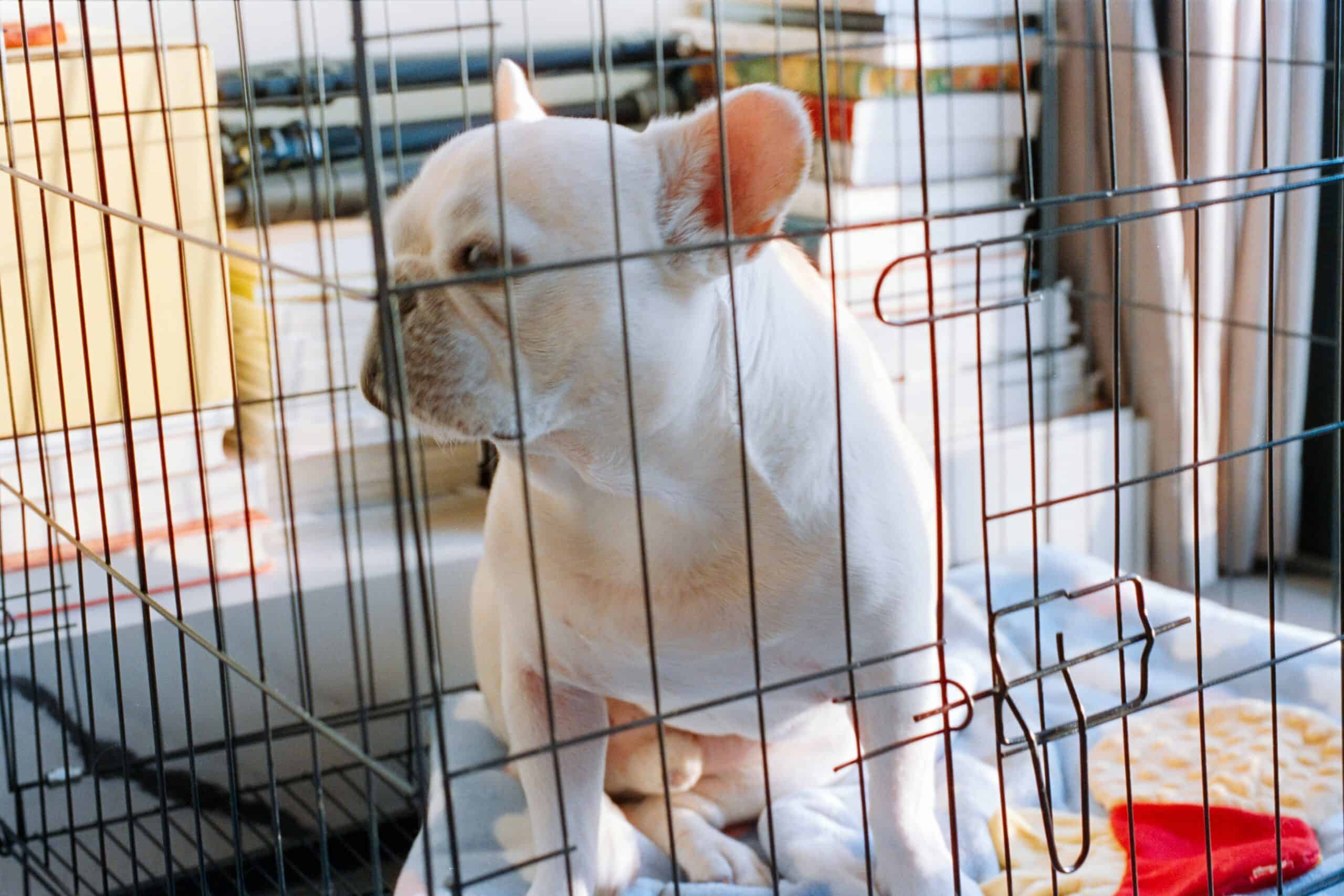
It is 11 PM, you are exhausted, and the dog in the crate has been whining, circling, and scratching for an hour straight. Figuring out why your dog won’t settle in the crate is the difference between fixing the real problem and just enduring it night after night. The behavior usually traces to one of five causes, and the fix for each is completely different. Treating a bored dog like an anxious one, or an under-exercised dog like a fearful one, is why so many crate problems drag on for weeks. If you’re shopping, start with our guide to the best washable dog beds.
A dog that will not settle is communicating something. It might be too full of energy, in need of a bathroom break, scared of the crate itself, reacting to where the crate sits, or simply never taught that the crate is a place to relax. Each cause has a signature, and reading it correctly saves everyone a lot of lost sleep.
This walks through the five causes, how to tell which one is yours, and what to do about each. Most crate-settling problems trace to energy, association, or location, and all three are fixable once you know which you are dealing with.
Key Takeaways
- A dog that won’t settle is signaling one of five things: energy, a bathroom need, fear, location, or no relaxation habit.
- The common mistake is assuming the dog is anxious when it is actually just under-exercised.
- A good walk or play session before crating solves more settling problems than any other single change.
- See a vet or trainer if the dog shows panic-level distress, since that points to separation anxiety rather than a settling habit.
What “Won’t Settle” Usually Means
Settling is a dog’s ability to downshift from alert to rest. A dog that cannot settle in the crate is stuck in an aroused state, and the crate is either failing to help it calm down or actively keeping it wound up. The whining, pacing, and scratching are symptoms. The cause sits underneath.
The trap is assuming every unsettled dog has the same problem. A young dog bouncing off the walls at bedtime has a different issue than a dog trembling at the back of the crate, which has a different issue than a dog that settles fine at night but loses it the moment you leave for work. Same surface behavior, three different causes, three different fixes.
Read the pattern before you act. When does it happen, what does the body language say, and what changed recently? The answers point to one of the five causes below. If your dog is new to the crate entirely, our guide on introducing a dog to a new kennel covers the foundation that the steps below assume is already in place.
Cause 1: The Dog Has Too Much Unspent Energy
This is the most common reason by a wide margin, and the most overlooked. A dog with a full tank of energy physically cannot settle, crate or no crate. You are asking a dog that needs to run to lie still, and it cannot comply any more than a toddler can nap after a sugar rush.
How to tell: the dog is young or a high-energy breed, the unsettling happens worst at the start of crate time, the dog seems wired rather than scared, or the dog settles fine on days it got a long walk and fails on days it did not.
What to do: drain the energy before crating. A solid walk, a game of fetch, or a training session that works the brain all help. Physical and mental exercise both count; a puzzle feeder or a short obedience session tires a dog in a different way than a walk. Aim to crate the dog when it is naturally winding down, not when it is still buzzing. Our guide on tiring out a high-energy dog covers ways to spend that energy efficiently.
Cause 2: The Dog Needs a Bathroom Break
Sometimes the dog is right and you are wrong. A dog that needs to relieve itself will not settle, and it should not have to. This is especially true for puppies, who physically cannot hold it as long as adult dogs, and for any dog whose schedule got disrupted.
How to tell: the dog settled fine earlier but suddenly became restless, the dog is a puppy (a rough guide is one hour of holding per month of age), it has been several hours since the last bathroom trip, or the restlessness has an urgent, pacing quality rather than a bored or wired one.
What to do: take the dog out calmly, on leash, with no play or fuss. Let it relieve itself, then return it to the crate without turning the trip into an event. The lesson you want is that bathroom needs get answered, but a crate trip is not playtime. If a puppy needs a middle-of-the-night break, that is normal and temporary; it shrinks as the dog grows.
Cause 3: The Dog Is Afraid of the Crate Itself
A dog with a negative crate association reads the crate as a threat, not a den. This happens when the crate was introduced too fast, used as punishment, or paired with something frightening. A fearful dog does not just protest; it shows real stress signals.
How to tell: the dog trembles, drools heavily, flattens its ears, or tucks its tail near the crate, it panics rather than protests, it refuses even high-value treats inside the crate, or the fear shows the moment the crate appears, before the door even closes.
What to do: rebuild the association from scratch, slowly. Go back to feeding meals inside, tossing treats in, and never closing the door until the dog enters willingly and relaxed. A fearful dog cannot be rushed; pushing makes the fear worse. This is a re-introduction, not a settling tweak, and it can take days or weeks. If the fear is severe or does not improve with patient work, a trainer can help.
Cause 4: The Crate Is in the Wrong Place
Location shapes settling more than people realize. A crate in a high-traffic hallway keeps a dog alert to every passing footstep. A crate isolated in a far room leaves a social dog feeling abandoned. Either extreme can keep a dog from settling, and the fix is simply moving the crate.
How to tell: the dog settles in some locations but not others, the unsettling tracks with household noise or activity nearby, the dog calms when it can see you and fusses when it cannot, or the crate sits somewhere with a lot of foot traffic, a draft, direct sun, or a noisy appliance.
What to do: find the middle ground. Most dogs settle best in a quiet corner of a room the family uses, close enough to feel included but out of the main traffic path. A bedroom often works well at night because the dog can sense you are near. Experiment; the right spot is the one where the dog stops scanning and starts resting. Once they do settle, our note on whether to wake a sleeping dog covers leaving them alone.
Cause 5: The Dog Was Never Taught to Relax in the Crate
A dog can tolerate the crate without ever learning to relax in it. It goes in, it endures, but it stays half-alert waiting to come out. This is a training gap rather than a fear or energy problem. The dog needs to learn that the crate is a place to switch off, not just a place to wait.
How to tell: the dog is not scared and not wired, it just stays alert and restless rather than lying down and sleeping, it watches the door the whole time, or it settles eventually but takes a long time and never seems truly relaxed.
What to do: build duration with calm, rewarded practice during the day, not just at night. Give the dog a long-lasting chew or stuffed toy in the crate so it has a reason to lie down and engage in something soothing. Reward calm behavior, ignore restlessness that is not distress, and let the dog learn that quiet earns good things. A dog that practices relaxing in the crate during low-pressure daytime sessions settles far better when it counts.
How to Tell Which Cause Is Yours
Start with the body language. Real stress signals, trembling, heavy drool, tucked tail, refusing food, point to cause 3, fear, which needs a slow re-introduction. Urgent pacing after a quiet stretch points to cause 2, a bathroom need.
If the dog is not scared and not signaling a bathroom need, look at energy and habit. A young or wired dog that fails worst at the start of crate time is cause 1, unspent energy. A dog that settles in some spots but not others is cause 4, location. A dog that is calm but stays alert and never truly relaxes is cause 5, no relaxation habit. Causes 1, 4, and 5 are the most common in dogs that are otherwise comfortable with the crate.
When to See a Vet or Trainer
Most settling problems resolve with more exercise, a better crate location, a bathroom schedule that fits the dog, or patient relaxation practice. A few point to something that needs professional help.
Reach out to a veterinarian or a certified dog trainer if the dog shows panic-level distress in the crate, if it injures itself trying to escape, if the unsettling only happens when you leave and comes with destruction or excessive drooling (possible separation anxiety), or if patient work over several weeks brings no improvement. Separation anxiety and noise phobias are real conditions that a settling routine alone will not fix, and a professional can build a behavior plan suited to the specific dog. Pushing a genuinely anxious dog harder makes things worse, so getting help early is the kinder and faster path.
Frequently Asked Questions
Why won’t my dog settle in the crate at night?
The most common reason is unspent energy, especially in young or active dogs. A dog that has not had enough physical and mental exercise cannot downshift to rest. Other causes include a bathroom need, the crate’s location, fear of the crate, or simply never having learned to relax in it. Match the fix to the cause rather than assuming it is always anxiety.
Should I let my dog out when it whines in the crate?
It depends on the whine. Answer genuine bathroom needs and real distress, but do not open the door for protest whining, or the dog learns that whining earns release. Wait for a quiet moment to let the dog out. Distinguishing the two takes attention to the dog’s body language and pattern.
How much exercise does my dog need before crating?
Enough that the dog is naturally winding down rather than buzzing. This varies widely by age and breed: a high-energy young dog may need a long walk plus play, while a senior or low-energy dog needs much less. Both physical exercise and mental work, like puzzle feeders or training, help drain energy.
Is it cruel to crate a dog that doesn’t want to go in?
A properly introduced crate is a safe den that most dogs come to like, not a cruelty. The key is building a positive association first and never using the crate as punishment. A dog that resists the crate usually had a rushed or negative introduction, which can be rebuilt with patience. Forcing a frightened dog in, though, is harmful and counterproductive.
Why does my dog settle at night but not when I leave for work?
Settling at night but panicking when you leave often points to separation anxiety rather than a crate problem. The crate is not the issue; your absence is. This pattern, especially with destruction, drooling, or escape attempts, is worth discussing with a vet or trainer, since separation anxiety needs its own behavior plan.
Can a crate be too big for a dog to settle?
Yes. A crate much larger than the dog needs can feel less den-like and more exposed, which some dogs find harder to settle in. The crate should let the dog stand, turn, and lie down fully, without a lot of extra empty space. A divider helps size a large crate down for a smaller or growing dog.
Will my dog grow out of not settling in the crate?
Often, yes, if the cause is energy or age. Puppies settle better as they mature, gain bladder control, and learn the routine. But settling problems rooted in fear or a poor association do not resolve on their own; they need a deliberate re-introduction. Identify the cause to know whether time alone will help.
Should I cover the crate to help my dog settle?
A partial cover makes the crate feel more den-like and can help dogs that are distracted by movement around them. Leave a side open for airflow and let the dog’s response guide you. Some dogs settle better covered; others prefer to see the room. Try it and watch what the dog prefers.
Recommended Reading
See also our guides to dog doors, and dog crate vs playpen.
Related Reading
Explore more: why does my dog pull on the leash, how to slow down a fast eating dog, front clip vs back clip dog harness, dog treat pouches, dog frisbees and flying discs, dog winter boots, why does my dog stare at me, and dog shampoos. Also explore: rope toy vs chew toy.
