
For the foundational guidance behind these picks, see the full guide to training a dog from scratch.
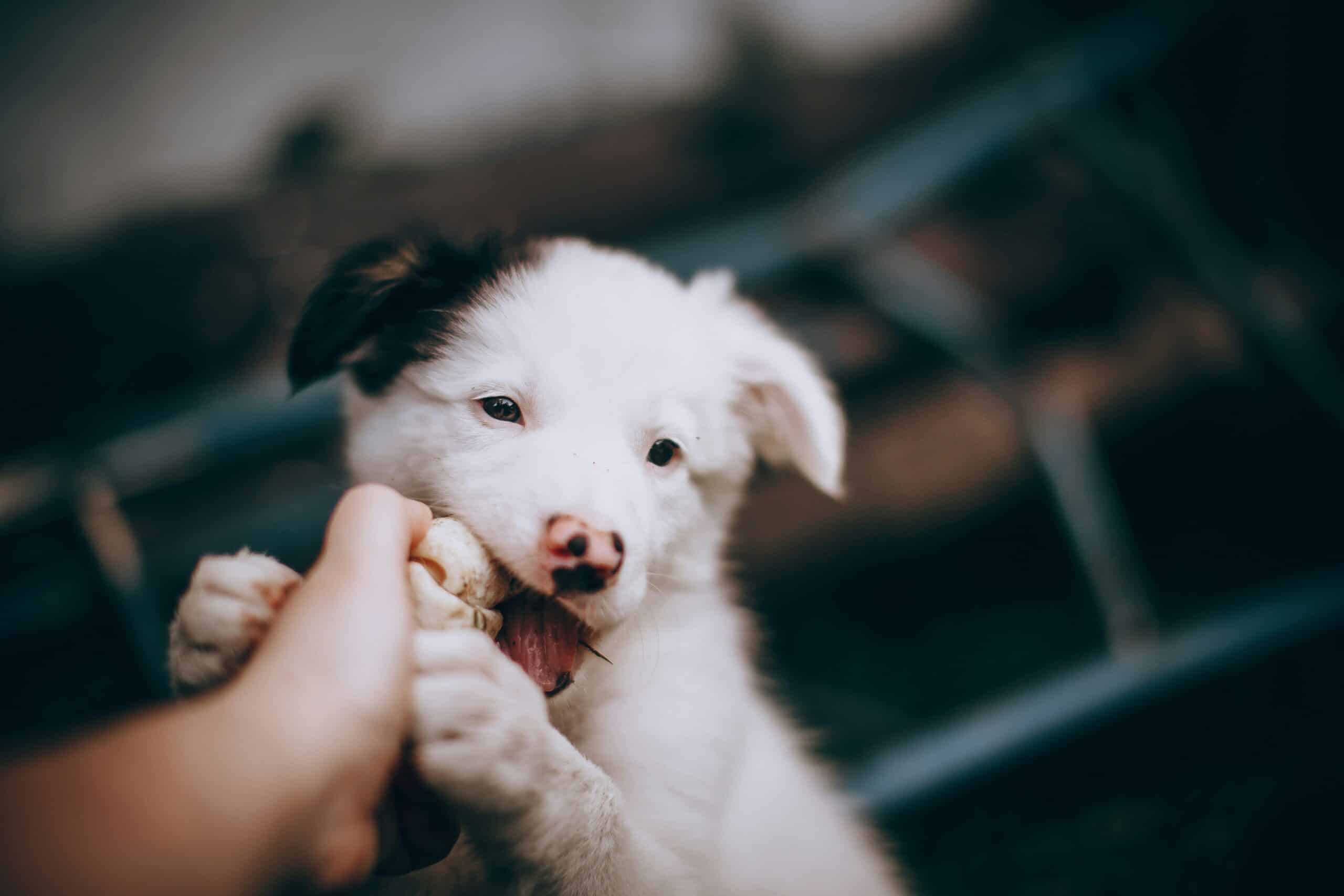
You brought home a puppy, and within an hour, she had punctured your sleeve, chewed a hole in the rug, and tried to bite your shoelaces while you walked. This is normal. This is so normal that experienced dog owners often warn first-time puppy parents to expect their hands and feet to be covered in small scratches for the first several months. Puppies bite everything because biting and mouthing are how they explore the world. The behavior typically peaks between 2-6 months of age, then declines as adult dental and behavioral patterns establish1. The peak coincides almost exactly with the teething period, which isn’t a coincidence. Comparing options? See our best dog food for puppies roundup.
The good news is that the behavior is developmental and self-limiting. The bad news is that the months while it’s happening can be exhausting, particularly during the heaviest teething phases. The biting peaks during a specific developmental window, then declines as the puppy emerges from teething with what trainers call “bite inhibition,” the ability to use her mouth gently around humans even when excited or playing rough. For the practical training side of guiding a puppy through this phase, see our guide to how to crate train a puppy, which covers structured downtime that reduces biting energy substantially.
This article covers the developmental biology of puppy biting, the teething pattern and what gets sharp when, why exploring with the mouth is necessary for puppy cognitive development, and when biting behavior crosses from normal puppy stuff into something that needs professional intervention.
Last updated: May 31 2026
Key Takeaways
- Puppy biting peaks between 2-6 months and serves multiple developmental functions: exploration, teething relief, social learning, and play behavior development1
- Teaching bite inhibition (gentle mouth use) during this window is one of the most important early training tasks; missing it produces adult dogs with poor mouth control
- The peak biting period coincides with teething; adult dental and behavioral patterns establish between 6-12 months as biting frequency declines1
- Biting that breaks skin regularly, biting that comes with growling and tense body language, or biting that doesn’t decrease with age may indicate the need for professional behavioral support
Why Puppies Bite at All
Several overlapping reasons make biting normal puppy behavior.
Mouth as primary exploration tool. Puppies don’t have hands. They have paws that can manipulate objects only loosely and a mouth that can grip, chew, taste, and explore. To investigate something new, a puppy puts it in her mouth. Investigating your hand by mouthing it is the puppy’s version of touching to feel texture, weight, and temperature. The behavior isn’t aggressive; it’s investigative.
Teething relief. Puppies have 28 baby teeth (also called milk teeth or deciduous teeth) that come in during the first 6-8 weeks of life. These get replaced by 42 adult teeth between roughly 3 and 7 months1. The teething process involves significant gum pressure, soreness, and discomfort. Chewing helps relieve this discomfort, and puppies often chew especially aggressively during the heaviest teething phases.
Play behavior development. Puppy play with littermates involves substantial mouthing, gripping, and bite-and-release. Through this play, puppies learn how hard they can bite without hurting their playmates (because a puppy who bites too hard gets a yelp and ends the play session). This calibration is critical learning that shapes how the dog uses her mouth as an adult.
Energy and stimulation outlet. Young dogs have enormous energy and limited ways to spend it. Mouthing is one of the easiest available outlets. A bored puppy bites things; an exercised, mentally engaged puppy bites things less.
Communication. Puppies use their mouths to communicate. A gentle mouth on your hand can be a request for attention, a way of initiating play, or general bonding behavior. Reading mouth use as always aggressive misses much of what puppies are doing socially.
The Teething Timeline
Understanding the teething schedule helps put the biting intensity in context. The pattern is roughly consistent across breeds, with small variations:
2-4 weeks: Baby teeth begin emerging. The puppy is still nursing and bite intensity is minimal1.
4-8 weeks: All 28 baby teeth complete eruption. Puppy begins weaning and exploring solid food. This is when puppies start engaging more actively with siblings through mouthing1.
8-10 weeks: Typical age when puppies leave their litter and go to new homes. They’ve been mouth-exploring everything in their environment for weeks and continue this behavior with the new household1.
3-4 months: Baby teeth begin falling out. This is often the most intense biting phase as gum pressure and itching peak. Puppies seek hard surfaces to chew on for relief1.
4-6 months: Adult teeth coming in to replace baby teeth. The puppy may have a mixed set of baby and adult teeth temporarily. Biting often peaks during this period1.
6-7 months: Adult tooth eruption mostly complete. Teething-related biting drops substantially. The puppy still mouths things but with less intensity and frequency1.
7-12 months: Biting reduces further as the dog matures behaviorally. By the end of this period, most well-trained dogs have established bite inhibition and use their mouths gently around humans1.
If your puppy is in the 3-5 month range and biting feels extreme, this is the most intense developmental window and will pass1.
Bite Inhibition: The Critical Concept
Bite inhibition is the dog’s learned control over how hard she bites. A dog with good bite inhibition can use her mouth on humans (during play, for taking treats, for general interaction) without applying meaningful pressure. The dog hasn’t lost the physical capacity to bite hard; she’s learned not to. This is one of the most important things you teach during puppyhood.
The reason it matters is that all dogs occasionally bite, even well-trained ones. Stress, fear, pain, or surprise can trigger a defensive bite from any dog. A dog with good bite inhibition responds with a controlled mouth use; a dog without it responds with full force. The difference between a snap that leaves no mark and a bite that requires stitches is often bite inhibition, not aggressive intent.
Puppies learn bite inhibition partly through play with littermates. When a puppy bites another puppy too hard during play, the bitten puppy yelps and disengages from play briefly. The biting puppy learns that excessive force ends the fun. Over hundreds of play sessions, the puppy calibrates her force to a level that maintains play.
Puppies separated from their litters too early (before 8 weeks) often have weaker bite inhibition because they missed this critical learning period. Owners need to deliberately teach what siblings would have taught. Mouth-related training overlaps with general manners work; our piece on how to stop a dog from jumping on people covers a related impulse-control issue that often arises around the same age.
When Biting Becomes a Real Concern
Most puppy biting is normal developmental behavior. Several patterns warrant professional evaluation:
Biting that draws blood regularly
The occasional accidental skin puncture during play happens. Regular bites that break skin, particularly after age 4-5 months, suggest that bite inhibition isn’t developing normally and warrants intervention1.
Biting with growling, stiff body, and threat displays
Normal puppy mouthing comes with loose, wiggling body language and play sounds. Biting accompanied by hard stares, raised hackles, stiff body, low growling, or other threat signals is different and warrants professional support.
Biting that doesn’t decrease with age
If your dog is past 7-8 months and biting frequency or intensity is the same as during peak teething, training isn’t progressing as expected1. Professional support can help identify what’s not working.
Biting specific people or situations consistently
A puppy who bites one specific family member but not others, or who bites consistently in specific contexts (during grooming, near food, when picked up), may be developing fear or resource issues that benefit from specific intervention.
Biting after a triggering event
Sudden onset of biting behavior after an injury, vet visit, or stressful event may indicate fear or pain. Veterinary evaluation to rule out medical causes is appropriate.
Predatory-style biting
Biting that involves stalking, fast lunging, intense focus, and gripping more than mouthing has a different quality than play biting and may indicate predatory drive that needs specific management.
When to Get Professional Help
Several situations warrant professional support:
- Biting that’s significantly more intense than typical puppy mouthing
- Biting that includes growling, snapping, or threat displays
- Children in the home where the biting risk is concerning
- Failure to make progress with consistent training methods over several weeks
- Biting in older puppies (6+ months) that hasn’t decreased with age
- Puppy from a singleton litter or with limited socialization history
- Suspected resource guarding around food, toys, or spaces
- Fear-based or defensive biting in specific contexts
- Multi-dog household tensions involving biting
- Owner concerns about safety or about how to proceed
Certified professional dog trainers using positive reinforcement methods are appropriate for most puppy biting issues. Veterinary behaviorists are appropriate for more complex cases including fear-based or aggressive behavior. The Certification Council for Professional Dog Trainers (CCPDT) and the American College of Veterinary Behaviorists (ACVB) maintain directories of credentialed practitioners.
Frequently Asked Questions
How long will this phase last?
The intensity peak is typically between 3-5 months. Most puppies’ biting drops substantially by 6-7 months and continues declining through 12 months. By the end of the first year, most well-trained puppies have established adult bite inhibition1. The 2-3 months of peak intensity feel longer than they are.
Is it true that some breeds bite more than others?
Yes, but individual variation within breeds is large. Breeds developed for active work (herding breeds, working terriers, sporting breeds) often go through more intense mouthing phases. Breeds developed for companionship may have milder phases. Specific lines within breeds vary substantially. Both nature and early experiences contribute.
My puppy bites only at night. What’s going on?
Evening biting often coincides with end-of-day overtired energy. Just as toddlers get cranky when overtired, puppies often get bitey. Earlier bedtime, a structured evening wind-down, adequate but not excessive late-day exercise, and clear quiet periods help reduce this pattern.
My older dog corrects the puppy by snapping. Is that okay?
Appropriate corrections from adult dogs are valuable for puppy socialization. A well-socialized adult dog who snaps in the air without making contact, or who uses a controlled inhibited bite to communicate “back off,” is teaching important social skills. Concerning patterns include corrections that make actual injuring contact, that produce fear in the puppy that persists after the moment, or that escalate over time. Monitor interactions and consult a trainer if the adult dog’s corrections seem disproportionate.
Related Reading
Explore more: dog food for puppies.
Sources
- American Veterinary Medical Association. Puppy Behavior and Development. https://www.avma.org/ (General reference on puppy developmental behaviors including mouthing, teething, and socialization.)
More Dog Care Guides
See also the complete guide to choosing dog gear.
