
For the foundational guidance behind these picks, see the foundational guide to feeding and watering your dog.
For our current top picks, see the best slow feeder bowls for dogs guide. How fast your dog eats decides this one. The slow feeder vs regular dog bowl choice is about pace: a slow feeder uses ridges and mazes to make a gulping dog work for each bite, while a regular bowl is the simple, easy-to-clean option for a dog that eats at a sensible speed on its own. One solves a real problem for fast eaters; the other is the no-fuss pick for relaxed eaters. If your dog inhales meals, our roundup of slow feeder bowls for dogs is the place to start. This guide helps you match the bowl to how your own dog eats.
Quick Verdict
Choose a slow feeder if your dog gulps its food, since slowing the pace can reduce gulping, air swallowing, and the rushed eating linked to digestive upset, especially in deep-chested breeds. Choose a regular bowl if your dog eats calmly or grazes through the day, since it is simpler, easier to clean, and all such a dog needs. A plain bowl is what I use for my own dog, who free-feeds at her own pace.
Why Trust This Guide
Comparisons draw on feeding behavior and the veterinary guidance cited in Sources. First-person notes apply only to the regular bowl I use for my own dog; slow feeders are covered fairly for the dogs they genuinely help.
Key Takeaways
- Slow feeders are the right choice for dogs that gulp meals, helping them eat at a calmer pace.
- Regular bowls suit calm eaters and free feeders, and they are simpler to clean and refill.
- Fast eating and air swallowing are a real concern for deep-chested breeds; ask your vet about bloat risk.
- The best bowl is the one that matches your individual dog’s eating style, not a one-size rule.
Disclosure: HappyPaws is reader-supported. As an Amazon Associate, we earn from qualifying purchases made through links on this page, at no extra cost to you.
How a Slow Feeder and a Regular Bowl Differ
The difference is built into the shape. A slow feeder molds ridges, mazes, or raised bumps into the bottom so a dog has to nose and lick around them, which stretches a 30-second meal into several minutes. A regular bowl is a plain, open dish that lets a dog eat freely at whatever pace it sets. One is designed to slow eating down; the other gets out of the way.
The Slow Feeder
Strengths
For a dog that inhales its food, a slow feeder forces a calmer pace, which can reduce gulping and the air swallowing tied to rushed eating. That matters most for deep-chested breeds, where fast eating and swallowed air are part of the conversation about bloat risk, a serious condition worth discussing with your veterinarian.1 The maze also adds a little mealtime enrichment.
Trade-Offs
The grooves take more effort to clean and can trap food if you skip a proper wash. Some dogs find a too-difficult feeder frustrating, so the right maze depth matters. For dogs that want a real puzzle, our guide to puzzle feeders for smart dogs goes further.
The slow feeder suits fast eaters, gulpers, and deep-chested breeds whose pace you want to slow. If your dog already eats calmly, it adds cleaning work without a clear benefit.
Check Price on AmazonThe Regular Bowl
Strengths
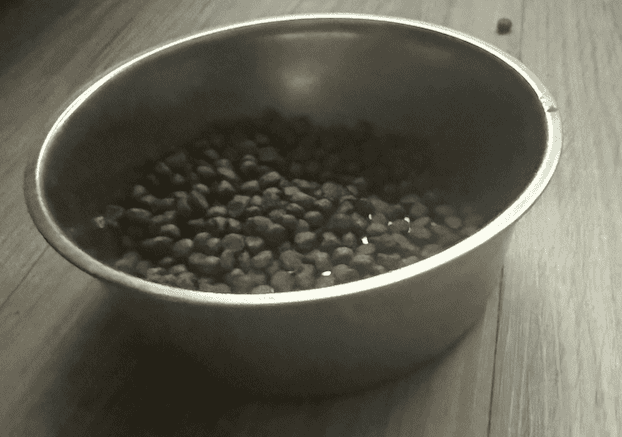
I use a regular bowl for my own dog, and it works best for her. She is a free feeder who eats at her own pace through the day, so her eating speed is never an issue, and a plain, open dish is simple to fill, simple to clean, and exactly what she needs. A regular bowl also makes portion sizes easy to see at a glance.
Trade-Offs
For a dog that gulps its food, a regular bowl does nothing to slow that down, which is the whole reason slow feeders exist. Choose a sturdy, tip-resistant material like stainless steel or heavy ceramic so an eager dog cannot shove it around the floor.
The regular bowl suits calm eaters, grazers, and free feeders, and anyone who wants the simplest dish to clean. If your dog inhales meals, a slow feeder is the better tool.
Check Price on AmazonSlow Feeder vs Regular Bowl, Head to Head
For Fast Eaters
The slow feeder wins clearly here. Slowing a gulper’s pace can ease the rushed eating and air swallowing that worry owners of deep-chested breeds, and it gives a frantic eater a calmer routine. A regular bowl offers no help with speed.
For Free Feeders and Grazers
The regular bowl wins for a dog that nibbles through the day or eats calmly, since there is no pace to fix. A free-feeding dog gets nothing extra from a maze and is better served by a simple, clean dish.
For Enrichment
A slow feeder adds light mealtime engagement, which can help a bored or food-motivated dog. If enrichment is the goal, a dedicated puzzle feeder does even more, while a regular bowl keeps meals purely functional.
For Cleaning and Upkeep
The regular bowl wins on upkeep, since an open dish rinses clean in seconds. A slow feeder’s grooves need a brush and a careful wash to avoid trapped, spoiling food, especially with wet food.
Slow Feeder vs Regular Bowl at a Glance
| Factor | Slow feeder | Regular bowl |
|---|---|---|
| Best for | Fast eaters and gulpers | Calm eaters and free feeders |
| Eating pace | Slows it down | Dog sets the pace |
| Enrichment | Light mealtime challenge | No |
| Cleaning | Grooves need scrubbing | Rinses fast |
| Portion check | Harder to eyeball | Easy to see |
| Best material | Food-safe, sturdy | Stainless or heavy ceramic |
Which Should You Choose?
Choose a Slow Feeder If
Your dog inhales meals, gulps and swallows air, or is a deep-chested breed whose eating pace you want to slow. It is a genuinely useful tool for the right dog, and pace is a real health conversation worth having with your vet.
Choose a Regular Bowl If
Your dog eats calmly, grazes, or free-feeds at its own pace, and you want the simplest dish to fill and clean. For a relaxed eater, a plain bowl is all you need. For travel, a packable option like a collapsible travel bowl covers meals on the go.
Recommended Reading
- gravity vs automatic feeders, which feeder style fits your dog.
- The best slow feeder bowls for dogs
- Puzzle feeders for smart dogs
- Gravity water bowls for steady hydration
- Collapsible bowls for travel
Slow Feeder vs Regular Bowl FAQ
Is a slow feeder or regular bowl better for my dog?
It depends on how your dog eats. A slow feeder is better for gulpers and fast eaters, since it slows the pace. A regular bowl is better for calm eaters and free feeders, since it is simpler to clean. Match the bowl to your individual dog.
Do slow feeders actually help?
For dogs that gulp their food, yes. Slowing the pace reduces rushed eating and air swallowing and can make meals calmer. For a dog that already eats slowly, a slow feeder mainly adds cleaning work without a clear benefit.
Can a slow feeder prevent bloat?
Slow feeders can reduce the fast eating and air swallowing associated with bloat risk, but they are not a guaranteed prevention. Bloat is a serious, multifactorial condition, especially in deep-chested breeds, so discuss prevention with your veterinarian.
Are regular bowls bad for dogs?
Not at all. A regular bowl is a fine, healthy choice for a dog that eats at a calm pace or free-feeds. Slow feeders solve a specific problem for fast eaters, but a relaxed eater does not need one.
What material is best for a dog bowl?
Stainless steel and heavy ceramic are durable, easy to clean, and tip-resistant for both styles. Choose a sturdy, food-safe bowl that your dog cannot easily push around the floor, and avoid thin plastic that scratches and harbors bacteria.
How do I clean a slow feeder?
Wash it after meals with a brush that reaches into the grooves, since trapped food can spoil quickly, especially with wet food. Many slow feeders are top-rack dishwasher safe, but check the label and rinse thoroughly to avoid buildup.
My dog eats too fast. What should I do?
A slow feeder is the most direct fix, encouraging a calmer pace. You can also split meals into smaller portions or use a puzzle feeder. If fast eating comes with frequent vomiting or distress, ask your veterinarian to rule out an underlying issue.
Is a slow feeder good for a free-feeding dog?
Usually not. A free feeder eats small amounts at its own pace, so there is no eating speed to slow. A regular bowl is simpler and a better fit for a grazing dog, while a slow feeder shines for dogs that gulp full meals at once.
Related Reading
Keep going with elevated versus standard bowls, and how to slow down a fast eater. Also explore: gravity vs fountain water bowl, dog frisbees and flying discs, dog winter boots, why does my dog stare at me, dog shampoos, dog whistles for training, dog sweaters, and automatic dog feeder reliability.
Recommended Reading
See also our guides to automatic dog feeder reliability, elevated vs standard dog bowl, and how to slow down a fast eating dog.
Sources
- American Veterinary Medical Association. Pet Owner Resources: feeding, fast eating, and bloat (GDV) risk in dogs. https://www.avma.org/resources-tools/pet-owners/petcare
