
New owner checklists run to thirty items. The list of things that get touched daily runs to about six, and most of the difference is stuff bought once and then left in a cupboard.
Working out which category something falls into before buying saves money and cupboard space, and it is easier than it sounds: daily gear is the stuff that stays where you can reach it. Our roundup of first dog essentials covers the wider list.
The Daily Six at a Glance
| Item | Times used daily | Replaced how often | Notes |
|---|---|---|---|
| Harness | 3 to 5 | Years | Stays on between walks for many dogs |
| Leash | 3 to 5 | Years | Lives by the door |
| Bag dispenser | Every walk | Refills only | Attaches to the leash |
| Water bowl | Constant | Years | Gravity versions refill less |
| Food bowl | Twice | Years | Washed daily |
| Bed and blanket | All day | Blanket washed monthly | Moves around the house |
The short version: leash, harness, bags, two bowls, and somewhere to sleep. Everything else is situational.
How We Picked
Items are grouped by how often they get handled rather than by how useful they sound, since the gap between the two is where money gets wasted. Durability matters more here than in any other category, because daily use is the harshest test equipment gets.
Selections reflect construction and documented features. Descriptions come from product research except where personal use is stated directly.
1. A Lightweight Harness, Best Overall
Why It Stands Out
A harness handled several times a day needs to be quick to put on and comfortable enough to stay on between trips, and mesh designs manage both.
Distributing pressure across the chest rather than the neck also suits small dogs, which is most of why harnesses replaced collars for walking.
Worth Knowing
Lightweight construction offers less control on a determined puller, which is a genuine trade rather than a minor one.
Continuous wear needs checking underneath for rubbing, particularly at the armpits. Our roundup of lightweight mesh harnesses covers fit.
This suits small dogs on frequent short outings. Skip it for strong pullers.
Check Price on Amazon2. A Retractable Leash, Best for Short Trips
Why It Stands Out
On short outings where the point is sniffing and toileting rather than covering distance, range without managing slack suits the job.
One-handed operation also matters when the other hand is holding a phone or a coffee.
Worth Knowing
Retractables offer less control in a sudden situation, and the thin cord can injure if it wraps around a leg or hand.
They are poorly suited to traffic and crowds, where a short fixed lead is safer. Our comparison of retractable and standard leashes covers the trade.
This suits quiet routes. Skip it near roads or crowds.
Check Price on Amazon3. A Leash-Mounted Bag Dispenser, Best Small Item
Why It Stands Out
Clipping bags to the leash means they travel with the thing you always pick up, which removes the one item most likely to be forgotten.
It costs almost nothing and eliminates a whole category of problem permanently.
Worth Knowing
Rolls run out quietly, so a spare somewhere is worth having.
Dispensers add a little swing to the handle, which some people dislike. Our roundup of poop bags and dispensers covers the options.
This suits every walker. Skip it only if you carry bags reliably in a pocket.
Check Price on Amazon4. A Gravity Water Bowl, Best Set and Forget
Why It Stands Out
A reservoir that refills the bowl as it empties means checking every few days rather than several times daily, which for a single-dog household is the difference between a task and a non-task.
It also means water is available if you are out longer than planned.
Worth Knowing
Gravity bowls need proper cleaning rather than topping up indefinitely, since biofilm forms in the reservoir where you cannot see it.
They are also bulkier than a plain bowl. Our roundup of gravity water bowls covers the designs.
This suits households out during the day. Skip it if you prefer a bowl you rinse daily.
Check Price on Amazon5. A Washable Blanket, Best Cheap Upgrade
Why It Stands Out
A throw on top of the bed is the layer that touches the dog, and it lifts off in one motion for washing while the bed itself stays put.
It also travels with the bed between rooms, which a fitted cover does not do as readily.
Worth Knowing
One blanket means a bare bed on wash day, so two in rotation makes the habit realistic.
Fleece holds hair noticeably, which is either useful or annoying. Our roundup of dog blankets and throws covers materials.
This suits any bed. Skip it if your bed cover already lifts off easily.
Check Price on Amazon6. Cleaning Wipes, Best Occasional Daily Item
Why It Stands Out
Wipes handle muddy paws, a dirty face after a meal, and quick cleanups without a bath, which in wet weather becomes a daily item rather than an occasional one.
They need no setup, which is what makes them get used at the door.
Worth Knowing
Not every dog tolerates paw handling, and forcing it daily builds resistance rather than acceptance.
Check ingredients for anything a dog will lick afterward. Our roundup of grooming wipes covers the options.
This suits wet or muddy conditions. Skip it if your dog dislikes paw handling.
Check Price on AmazonWhat I Actually Reach For
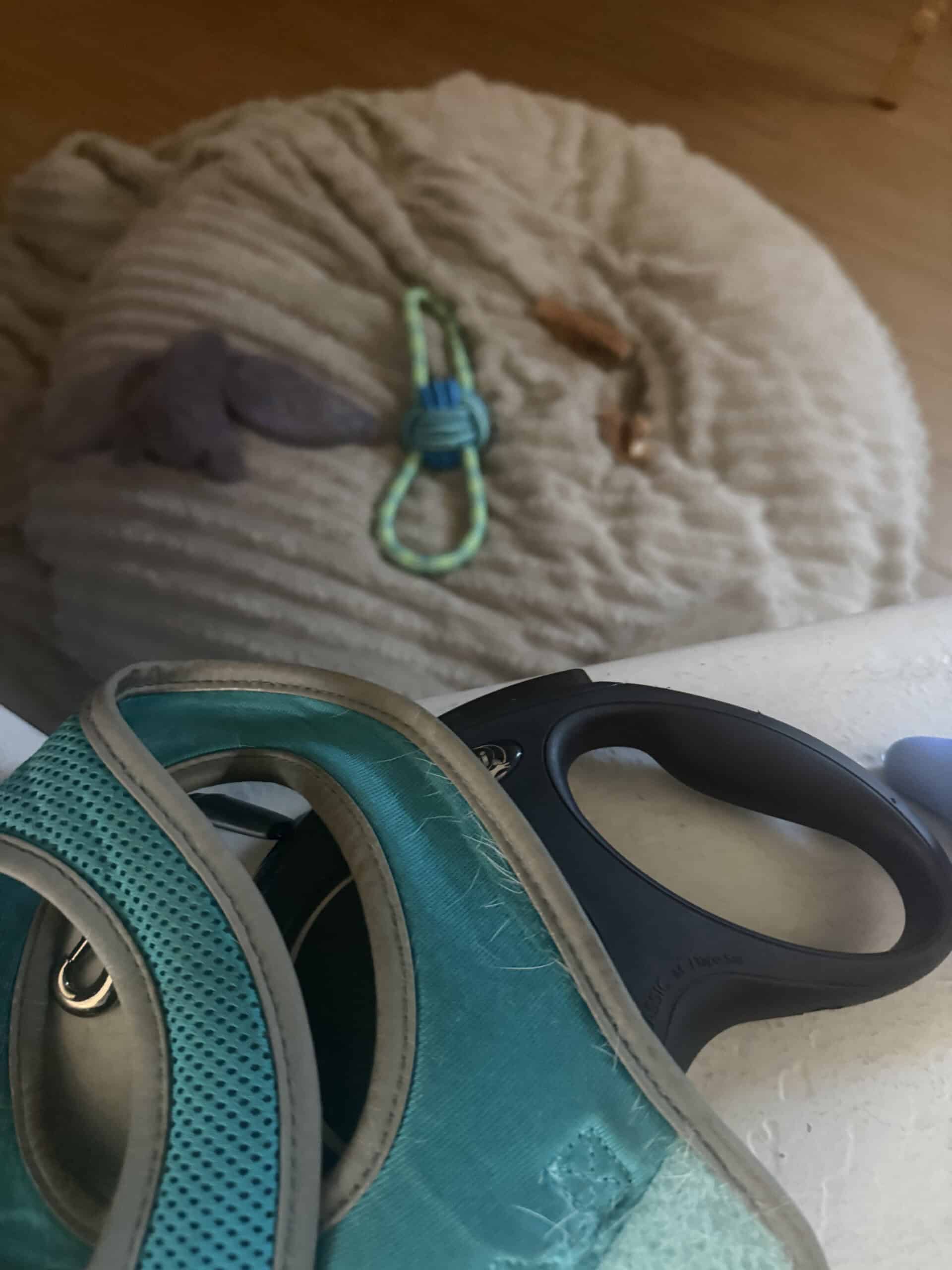
Mine is a harness, a retractable leash, and a bag dispenser for walks, which happen three or four times a day. A gravity water bowl and a regular food bowl. A bed with a soft throw on it that moves around the house with her, and cleaning wipes.
That is the list. Everything on it gets handled daily or close to it, and I would notice within a day if any single item disappeared, which is a reasonable test for whether something belongs on a daily list at all.
What is not on the list is instructive too. She has four toys and uses one of them, a crate that only comes out for the car, and a cupboard of treats she has declined. None of that was wasted exactly, and none of it is daily gear.
If I were starting again I would buy the six things above first and then wait to see what the dog actually wanted before buying anything else. The gap between what gets recommended and what gets used is wide, and you cannot tell which is which until the dog arrives.
What I cannot compare is different harness styles, fixed leashes, or fountain bowls, since I have used one of each thing rather than several.
What Does Not Make the List
Crates, for many dogs
Useful for travel, recovery, and training, and not a daily item once a dog is settled unless they sleep in it by choice.
Most toys
Dogs tend to use one or two regularly. The rest sit in a bin, which is fine and worth knowing before buying a variety pack.
Grooming tools beyond a brush
Clippers, dryers, and tables are periodic rather than daily, and plenty of owners never need them at all.
Clothing, outside specific climates
Coats matter in genuine cold and boots matter on hot pavement or ice. Elsewhere they are occasional. Our roundup of gear for hot climates covers when they do earn a place.
What to Look For
Is it within reach?
Daily gear lives by the door or on the floor. Anything stored in a cupboard is by definition not daily.
How many steps to use it?
Something requiring assembly or fetching gets skipped on the fourth trip of the day. Friction decides use.
Will it survive daily handling?
A harness put on and taken off several times a day gets more wear in a month than most gear sees in a year.
Can it be washed easily?
Anything touching the dog daily gets dirty. If washing is a chore it will not happen often enough.
Common Mistakes to Avoid
Buying the full checklist upfront
Most lists include things a given dog will never need. Buying the daily items first and waiting costs nothing.
Choosing gear you have to fetch
Anything not within reach of the door gets used less than you intended.
Buying variety instead of quality
One good harness beats three cheap ones, particularly for something handled several times daily.
Assuming your dog wants what the article says
Toys especially. Dogs have preferences and the only way to find them is to observe rather than to buy widely. Our roundup of budget dog gear covers starting cheaply.
Worth reading next: our note on gear for apartment living, our guide to small dog essentials, our roundup of beds for small dogs, and a note on leashes for apartment walks.
Daily Dog Gear FAQ
What do you actually need for a dog every day?
A harness or collar, a leash, bags, a water bowl, a food bowl, and somewhere to sleep. That covers daily life for most dogs, and everything else on a typical checklist is situational or periodic.
Should I buy everything before getting a dog?
Buy the daily items first and wait on the rest. A great deal of recommended gear turns out to be wrong for a particular dog, and you cannot tell which until they arrive.
Is a crate daily gear?
Only if your dog chooses to sleep in it. For many dogs a crate is travel and training equipment that lives in a cupboard the rest of the time, which is a legitimate use rather than a waste.
How many toys does a dog need?
Fewer than most people buy. Dogs tend to have one or two they genuinely use, and buying more of the type that works beats buying variety in the hope something lands.
Are gravity water bowls better?
They reduce refilling to every few days rather than several times daily, which suits households out during the day. They need proper cleaning rather than endless topping up, since the reservoir is where biofilm forms.
How often should daily gear be replaced?
Harnesses and leashes last years with normal use, and worn stitching, frayed webbing, and failing clips are the things to watch. Blankets and bowls outlast most people’s patience with them.
What is the most underrated daily item?
A bag dispenser clipped to the leash, which costs almost nothing and permanently solves the most commonly forgotten item. It is the smallest purchase with the highest hit rate.
Do I need both a collar and a harness?
Many owners use a harness for walking and a collar for identification tags. That combination is common, and whether you need both depends on local requirements and how your dog walks.
