
People search for a “harness for pulling” for two different reasons, and the best harness depends on which one is yours. Some want to stop a dog that pulls hard on the leash, which is a training problem solved by front-clip and no-pull designs that gently redirect the dog. Others want a harness they can safely pull on themselves, a sturdy, comfortable way to draw a dog in close and keep control in a tight spot, which is a job a well-made back-clip harness does well. This guide covers both. Below are six harnesses, including the front-clip picks that discourage pulling and the back-clip vest I use to keep my own small dog close and secure, plus a plain guide to choosing the right one for your goal. Our guide to dog hiking backpacks is a natural next read.
Two Meanings of “Harness for Pulling”
It is worth being clear up front, because the wrong match leads to disappointment. If your dog drags you down the street and you want that to stop, you need a no-pull harness with a front clip or a martingale cue: the leash attaches at the chest, so pulling turns the dog gently back toward you instead of letting it lean into the load. If instead you have a dog, often a small one, that you simply need to pull in close and hold securely in traffic, on a narrow sidewalk, or when a larger dog appears, then a strong back-clip harness is the right tool. The clip sits on the back, the load spreads across the chest and shoulders, and you can draw the dog to your side safely. Both are valid. Just know which you are buying.
A quick safety note that applies either way: take pulling force on a harness, never on a flat collar against the throat. For more on that choice, see our dog collar vs harness breakdown and our explainer on front-clip vs back-clip harnesses.
Quick Verdict
To stop a dog from pulling, the Ruffwear Front Range is the best all-rounder and the PetSafe Easy Walk is the cheapest training tool that works. Escape artists are best contained by the 2 Hounds Freedom, and strong large dogs by the handle-equipped Julius-K9. The Rabbitgoo covers the basics on a tight budget. And for keeping a small dog close and secure, the back-clip KRUZ mesh vest is the one I actually use, and it has never let me down.
Disclosure: HappyPaws is reader-supported. As an Amazon Associate, we earn from qualifying purchases made through links on this page, at no extra cost to you.
Ruffwear Front Range: Best Overall
The Ruffwear Front Range is the harness most people should start with, because it covers both jobs in one. It has a chest front clip for the days you want to discourage pulling and a sturdy back clip for relaxed walks and everyday control, so you are not locked into a single use. The padded, well-distributed construction is comfortable for the dog, the buckles feel secure, and the build quality is a clear step above bargain harnesses.
It costs more than basic options, but the dual-clip versatility and durability earn it. If you want one harness that handles training, daily walks, and secure control without compromise, this is it.
Who it is for: owners who want one quality harness for both no-pull training and everyday control. Who should skip it: anyone on the tightest budget who only needs the basics.
PetSafe Easy Walk: Best for Training a Dog to Stop Pulling
If your single goal is to stop pulling, the PetSafe Easy Walk is the most affordable harness that genuinely helps. It is front-clip only, with a martingale chest strap that tightens slightly and turns the dog back toward you when it surges ahead, giving a gentle, consistent cue without choking. For dogs in active leash training, that redirection is exactly the feedback that speeds up the lesson.
Because it is purpose-built for training rather than all-day control, it is a simpler harness than the dual-clip options, and some dogs need a good fit check to prevent the chest strap from rotating. Pair it with consistent technique from our guide on how to stop a dog from pulling on the leash and it does its job.
Who it is for: owners actively training a dog out of pulling on a budget. Who should skip it: anyone who wants a back-clip option for relaxed walks too.
2 Hounds Design Freedom: Best for Escape Artists
For the dog that wriggles out of everything, the 2 Hounds Design Freedom is built to close the escape route. Its dual-clip design pairs a front attachment for no-pull control with a back clip for everyday walking, and the wide loop geometry and snug, adjustable fit make it much harder for a determined dog to back out. The velvet-lined straps also help prevent chafing on dogs that test their gear.
It sits in the mid-price range and needs careful adjustment to get the escape-proof fit, but for a known Houdini it is worth the effort. Read our notes on how to fit a dog harness to dial it in.
Who it is for: owners of dogs that slip or back out of standard harnesses. Who should skip it: calm walkers who do not need escape-proofing.
Julius-K9 IDC Powerharness: Best for Strong, Large Dogs
The Julius-K9 IDC Powerharness is the control choice for a big, powerful dog. It is a back-clip working harness with a rugged build and a grab handle on top, which is what you want when you need to physically take hold and steer or restrain a strong dog quickly. The load spreads across the chest, the closure is heavy-duty, and the whole thing is made to take real force without flexing or failing.
It is not a no-pull training device, so it will not teach a dog to stop pulling on its own, and it is the priciest pick here. But for secure, hands-on control of a large dog, it is the most confidence-inspiring harness on this list. If your dog is big and strong, also see our no-pull harnesses for large dogs.
Who it is for: owners of large, strong dogs who need a tough harness with a control handle. Who should skip it: small-dog owners, for whom it is overbuilt.
Rabbitgoo No-Pull: Best Value
The Rabbitgoo delivers the dual-clip formula at the lowest price here. You get both a front clip for discouraging pulling and a back clip for casual walks, plus adjustable straps and a generally comfortable fit, which is a lot of harness for the money. For owners who want to try the no-pull approach without committing to a premium harness, it is the sensible entry point.
The materials are not as refined as the premium picks, and very strong dogs will outclass it over time, but for everyday dogs and budget-conscious owners it punches above its price.
Who it is for: budget shoppers who still want dual-clip versatility. Who should skip it: owners of powerful dogs who need premium durability.
KRUZ Mesh Vest: Best for Secure Control of a Small Dog
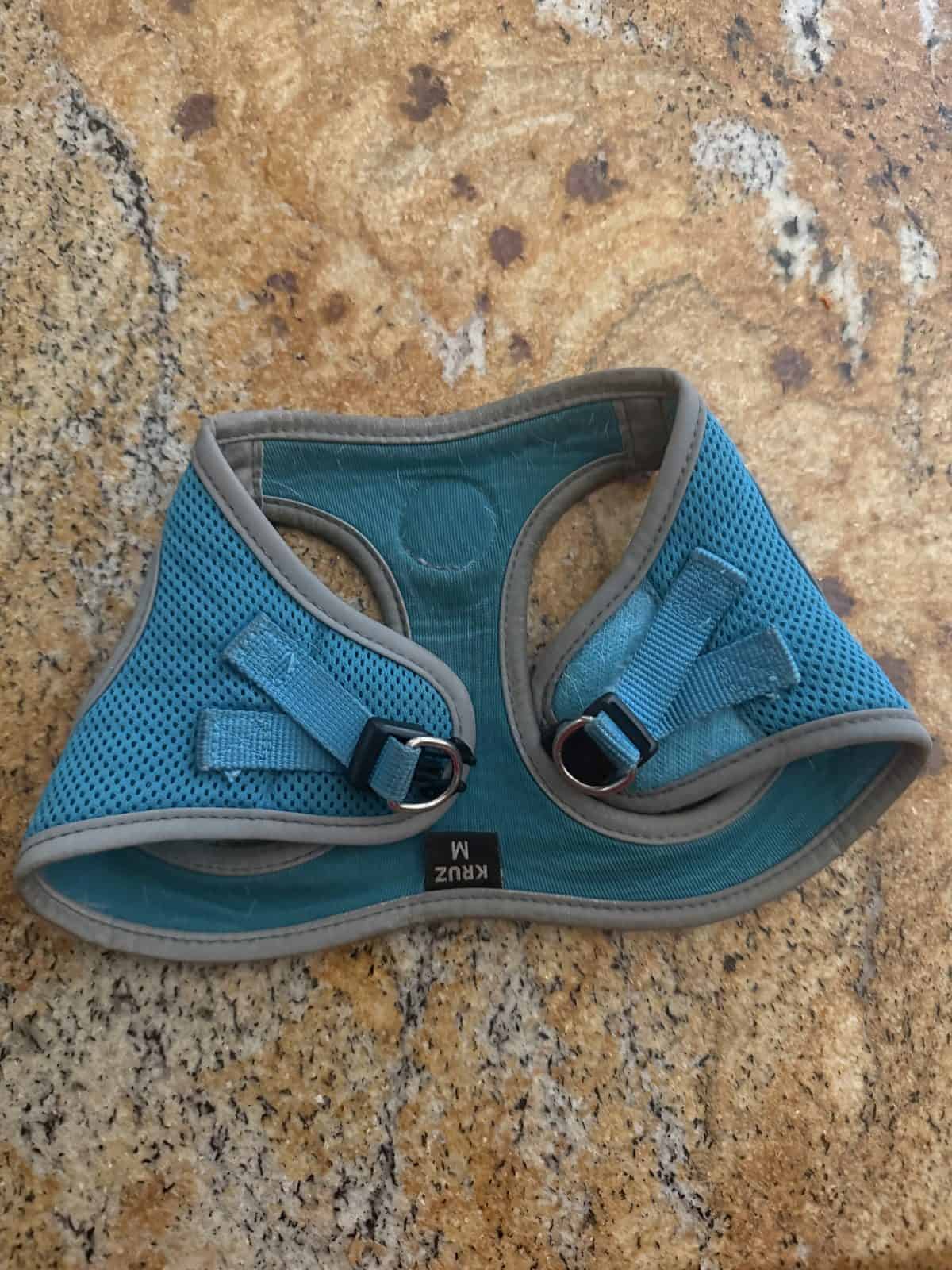
The harness I actually use is a KRUZ soft mesh step-in vest, a back-clip design, on my small terrier mix. My need is not to train her out of pulling, it is to keep her close and under control when it counts, and for that it has been genuinely good. On a narrow sidewalk, or when a neighbor’s large dog is out, I can draw her right in to my side and hold her there securely, and the harness takes that pulling force across her chest the way it should. I have never had an issue with it: the clip and stitching have held, and the padded mesh stays comfortable on a small dog.
A few practical things I like about it. It is a step-in vest, so it goes on quickly without fighting legs through straps. The mesh is breathable, which matters for a small dog in warm weather. The gray trim is reflective, a small but real plus for low-light walks. And the broad vest panel spreads the load comfortably, which is part of why pulling her in close never seems to bother her. Mine is a size M, and KRUZ runs a size range, so measuring first is worth it.
To be clear about what it is: this is a back-clip harness for secure control and comfort, not a no-pull training tool. It will not teach a dog to stop pulling the way a front-clip does, and a strong, large dog is not what it is built for. But if your goal is the everyday small-dog reality of keeping your dog close and safe in tight spots, a sturdy back-clip vest like this is exactly the right tool, and it is the one that has earned its place on my walks. For more small-dog options, see our best dog harnesses for small dogs.
Quick Comparison
| Harness | Price | Clips | Best for |
|---|---|---|---|
| Ruffwear Front Range | ~$45 | Front + back | Best overall |
| PetSafe Easy Walk | ~$25 | Front only | Training to stop pulling |
| 2 Hounds Freedom | ~$40 | Front + back | Escape artists |
| Julius-K9 Powerharness | ~$55 | Back + handle | Strong, large dogs |
| Rabbitgoo No-Pull | ~$20 | Front + back | Budget value |
| KRUZ Mesh Vest | Budget | Back | Secure control, small dogs |
What to Look for in a Harness for Pulling
Once you know which job you need, a few features decide the right harness.
Clip position is the most important choice
A front clip discourages pulling by turning the dog back toward you, so it is the choice when the goal is training. A back clip is more comfortable and lets you take pulling force safely across the chest, so it is the choice for relaxed walks and for drawing a dog in close. Dual-clip harnesses give you both. Match the clip to your goal first, then worry about the rest.
Fit and escape resistance
A harness only works if it fits. Measure the chest girth and check the size chart rather than guessing, and look for multiple adjustment points so you can get it snug enough that two fingers fit under the straps. A poorly fitted harness rubs, slips, or lets a clever dog back out, so fit matters as much as the model.
Comfort and build for your dog’s size
Padding and breathable mesh keep a harness comfortable for long or warm walks, which matters most for small dogs with less bulk to cushion straps. Big, strong dogs need heavier construction and ideally a control handle, while small dogs are better served by a light, soft vest that does not overwhelm them.
Everyday extras
Reflective trim adds visibility on low-light walks, a step-in design speeds up putting it on, and a top handle helps with quick hands-on control. None of these are essential, but they are the small touches that make a harness pleasant to live with day to day.
Our Verdict
Start with your goal. If you are training a dog to stop pulling, the Ruffwear Front Range is the best all-rounder and the PetSafe Easy Walk is the budget tool that works, with the 2 Hounds Freedom reserved for escape artists. If you need hands-on control of a strong, large dog, the Julius-K9 is the confident choice, and the Rabbitgoo covers the basics for very little. If your reality is keeping a small dog close and secure in tight spots, the back-clip KRUZ mesh vest has quietly handled exactly that for me without a single issue, which is all most small-dog owners need a harness to do.
Frequently Asked Questions
What does “harness for pulling” actually mean?
It has two meanings. For some people it means a no-pull harness that stops a dog from pulling, which is a front-clip training tool. For others it means a harness you can safely pull on yourself to control the dog, such as a sturdy back-clip vest for keeping a small dog close. Decide which one you need before you shop, since the best harness differs for each.
Do no-pull harnesses actually stop dogs from pulling?
Front-clip no-pull harnesses reduce pulling by redirecting the dog back toward you, which discourages the behavior and helps training along. They are a tool, not a cure: lasting results come from pairing the harness with consistent leash technique. They work best as part of active training rather than a one-time fix.
Is a front-clip or back-clip harness better?
Neither is better overall; they do different jobs. Front-clip harnesses are better for discouraging pulling, since the chest attachment turns the dog back toward you. Back-clip harnesses are more comfortable and let you safely take pulling force to keep a dog close, which suits relaxed walks and small dogs. Many harnesses offer both clips so you can switch.
Are back-clip harnesses bad for pulling?
No. A back clip is the safe place to take pulling force, spreading it across the chest and shoulders rather than the throat. What a back clip does not do is discourage pulling, since it lets the dog lean into the harness. So a back clip is good for control and comfort, while a front clip is the choice when your goal is to stop the pulling.
Is it safe to pull a small dog close by the harness?
Yes, when you use a properly fitted harness rather than a collar. A back-clip vest spreads the force across the chest, so drawing a small dog in close to keep it safe, on a narrow sidewalk or near a larger dog, is appropriate and comfortable for the dog. Pulling a dog by a flat collar against the throat is what you want to avoid.
How do I measure my dog for a harness?
Measure the chest girth at the widest point just behind the front legs, and weigh your dog, then compare both to the brand’s size chart rather than guessing by breed. Sizing varies between brands, so check each one. A correctly sized harness should be snug enough that two fingers fit under the straps without it being loose enough to slip.
How do I stop my dog backing out of a harness?
Most escapes come from a loose fit, so tighten the straps to a snug two-finger fit and choose a harness with multiple adjustment points. Escape-resistant designs with a wider chest loop, like the 2 Hounds Freedom, help with determined backers. Checking the fit every few walks keeps it secure as straps settle.
Can a harness hurt a dog if it pulls?
A well-fitted harness is far safer than a collar for a dog that pulls, since it keeps force off the neck. Problems come from poor fit or constant heavy pulling, which can chafe or strain, so use padding, correct sizing, and front-clip training to reduce hard pulling. If your dog pulls intensely, address the behavior alongside the gear.
Related Reading
Keep going with our guides to the best dog harnesses for small dogs, how to choose a harness for a small dog, and the best dog leashes for small dogs.
Recommended Reading
See also our guides to dog lift harnesses, and dog sunscreen.
